

Studio or One Bedroom: What Cat Owners Need to Know First
1 bedroom cat friendly apartments are the most popular choice for cat owners who want to give their feline companion a dedicated space - and for good reason.
Here's a quick breakdown to help you decide:
| Factor | Studio | 1 Bedroom |
|---|---|---|
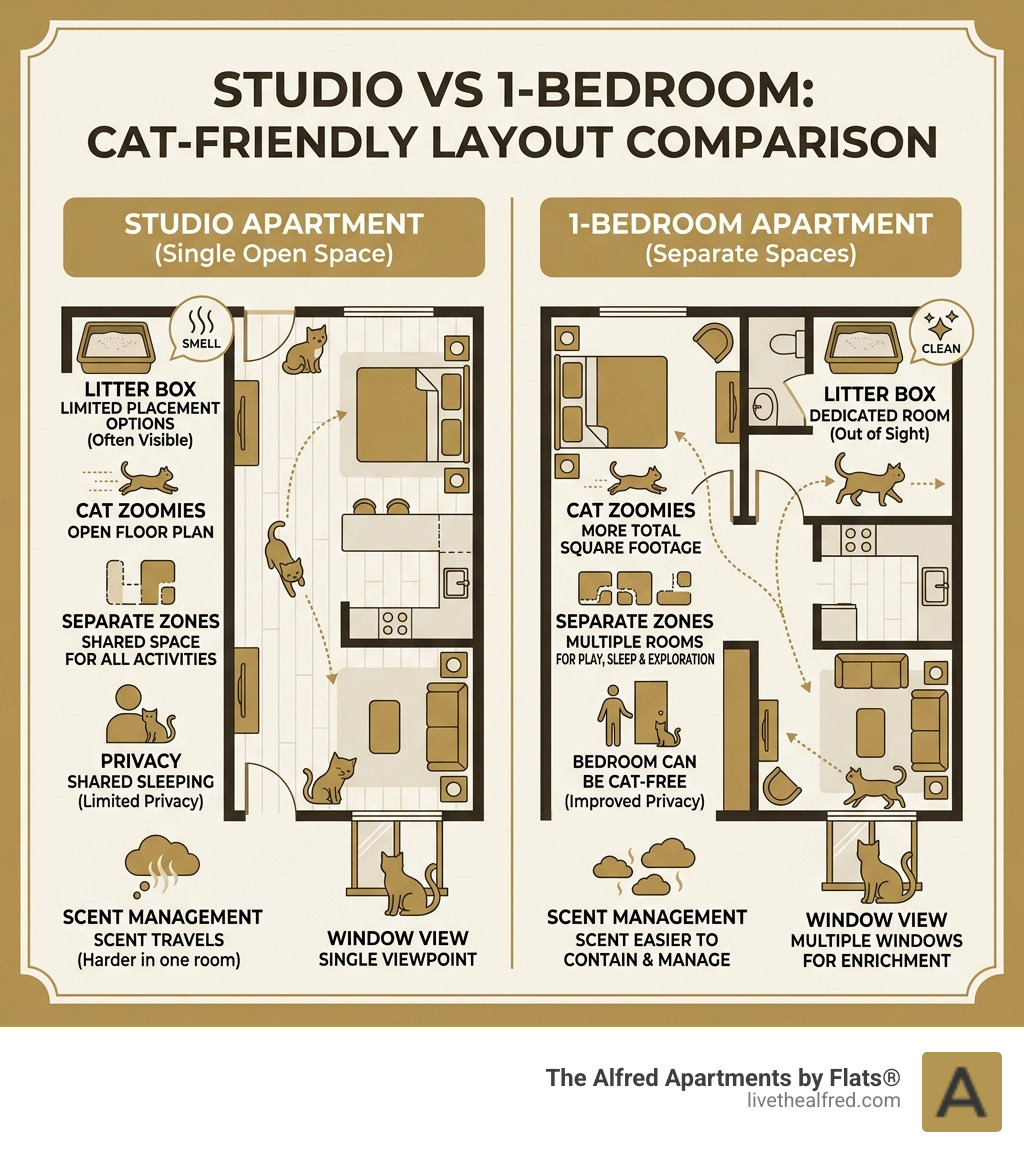
| Litter box placement | Limited, visible options | Separate room keeps it out of sight |
| Zoomie space | Open floor plan, but smaller | More total square footage |
| Scent management | Harder in one shared space | Easier with a dedicated room |
| Your privacy | Shared with cat at all times | Bedroom can be a cat-free zone |
| Cat enrichment | Fewer distinct zones | Multiple rooms = more to explore |
According to Gallup polling data, around 29% of Americans own a cat - making cat-friendly housing one of the most searched rental categories in cities like Chicago, Knoxville, and Charleston.
Cats need more than just a roof over their heads. They thrive with vertical space, distinct zones for sleeping and play, and easy access to a window with a view.
The layout you choose matters - not just for your cat's happiness, but for yours too.
Key Features of 1 Bedroom Cat Friendly Apartments
When searching for the perfect home for a feline friend in downtown Chicago, the layout of a one-bedroom unit offers distinct advantages that a studio often lacks. While a studio is cozy, 1 bedroom cat friendly apartments provide the structural variety that cats crave.
The Power of the Separate Bedroom
The most obvious benefit is the door. Having a separate bedroom allows for the creation of a "sanctuary space." If guests are over or if a cat is particularly active at 3:00 AM (the classic "midnight zoomies"), having a door to close is a lifesaver. It also allows for keeping cat hair off bed linens more effectively if the bedroom is designated as a human-only zone.
Maximizing Vertical Space
In a one-bedroom layout, there is typically more wall real estate. This is crucial because cats view their world in three dimensions. More walls mean more opportunities for "catification"—installing floating shelves, tall cat trees, or perches. In Chicago apartments featuring historic architecture with high ceilings, this vertical volume is a playground waiting to happen. More information about finding the right space is available in this guide to cat-friendly rentals.
Distinct Enrichment Zones
Cats are territorial creatures that thrive on routine and environmental "zones." A one-bedroom apartment naturally creates these:
- The Hunt Zone: The kitchen and dining area where meals are served.
- The Social Zone: The living room where interaction occurs.
- The Private Zone: The bathroom or laundry nook where the litter box resides.
- The Rest Zone: The bedroom for deep, undisturbed naps.

Studio vs. One Bedroom: Choosing the Best Layout for Your Cat
Choosing between a studio and a one-bedroom isn't just about furniture; it’s about managing the logistics of living with a small predator.
Scent Management and the Litter Box
One of the biggest hurdles in a studio is the litter box. In a single-room living space, there is nowhere to hide the scent or the "crunch" of tracked litter. In 1 bedroom cat friendly apartments, there is usually a hallway or a larger bathroom that can accommodate a litter box tucked away from primary living and sleeping areas.
| Feature | Studio Apartment | One-Bedroom Apartment |
|---|---|---|
| Litter Box Placement | Usually in the bathroom or a corner of the main room; scent travels easily. | Can be placed in a laundry closet, large bathroom, or hallway nook. |
| Tracking Control | Litter often ends up near the bed or sofa. | Use of "litter mats" in a separate room keeps debris contained. |
| Privacy for the Cat | Hard for the cat to find a truly quiet, dark spot during the day. | The bedroom provides a secondary quiet zone away from TV/kitchen noise. |
| The "Zoomie" Track | Circular or short bursts; limited by furniture density. | Longer straightaways through the hallway and between rooms. |
Square Footage and the "Zoomies"
While a studio might offer 500 square feet of open space, a one-bedroom often provides 700 to 800 square feet. This extra room isn't just for a desk; it's for the cat’s physical health. Cats need to reach top speeds to burn off energy. A hallway in a one-bedroom acts as a literal runway for a cat to sprint from the living room to the bedroom window. For a deeper dive into the layouts available in the heart of the city, see this 1-bedroom-apartments-loop-complete-guide.
Essential Amenities for Feline Residents
Living in a luxury apartment in The Loop means style does not have to be sacrificed for a pet's comfort. Certain amenities make the transition to apartment living much smoother for a cat.
Floor-to-Ceiling Windows
For an indoor cat, the window is their television. "Cat TV" consists of watching birds, moving cars, and the bustling streets of downtown Chicago. Apartments with large, floor-to-ceiling windows or low windowsills are highly coveted because they allow cats of all ages to observe the world without needing to jump onto high furniture.
In-Unit Laundry
A washer and dryer is a significant cat amenity. Cats are notorious for shedding, and having the ability to quickly toss a cat bed or a hair-covered throw rug into the wash is a game-changer for cleanliness. Furthermore, the warmth from a running dryer often becomes a cat’s favorite napping spot nearby.
Balconies and Fresh Air
If a one-bedroom includes a balcony, it offers a safe way for a cat to experience the outdoors—provided proper safety measures are used. Even just cracking a heavy-duty screened window allows a cat to catch the scents of the city, which provides significant mental stimulation. To see how these features fit into a larger community, explore these apartment-complex-pet-friendly options.
Navigating Pet Policies and Fees
Understanding the "fine print" is the most important step before signing a lease for 1 bedroom cat friendly apartments. Every building has different rules, and knowing them upfront prevents difficulties later.
Understanding the Costs
Most cat-friendly rentals involve a few different types of financial commitments:
- Pet Fee: This is typically a one-time, non-refundable fee paid at move-in. It covers the administrative costs of registering a pet and the general wear and tear pets might cause to common areas.
- Pet Rent: This is a small monthly fee added to the base rent. Think of it as a "subscription" for the cat to live in the building.
- Security Deposits: Some places may require a refundable pet deposit, though many modern luxury buildings prefer the one-time fee model.
Common Restrictions
Even if a building is "pet-friendly," there are usually limits. Most high-end Chicago rentals, like those in the South Loop or Downtown, maintain a two pet maximum per household. While breed restrictions are more common for dogs, some buildings may have rules regarding "exotic" pets or specific requirements for cats to be spayed/neutered and up-to-date on vaccinations.
Documentation Needs
Be prepared to provide:
- A photo of the cat.
- Vet records showing current vaccinations.
- Proof of renter's insurance that includes pet coverage.
For those looking specifically in the heart of the city, more details are available on 1-bedroom-apartments-downtown-chicago regarding specific requirements.
Frequently Asked Questions
Finding the right neighborhood can be just as important as the apartment itself. In Chicago, areas like The Loop, West Loop, and South Loop offer a high density of pet-friendly high-rises. These neighborhoods often feature local pet boutiques and specialty vets within walking distance.
When searching online, always use the "Pet Friendly" or "Cats Allowed" filters immediately. This saves time during the search for a floor plan. If looking in specific downtown sub-neighborhoods, check out the guide on 1-bedroom-apartments-south-loop.
What are the typical pet fees for 1 bedroom cat friendly apartments?
In the Chicago market, pet fees can vary. A one-time non-refundable fee ranging from $300 to $500 is common. Monthly pet rent usually falls between $20 and $35 per cat. It is rare to see "cat-only" buildings; usually, these fees apply to both dogs and cats.
How many cats are allowed in 1 bedroom cat friendly apartments?
The industry standard for luxury rentals is a two pet maximum. This is often due to local fire codes and building management policies designed to ensure every pet has enough space to live comfortably. While a one-bedroom apartment can easily accommodate two cats, adding a third can lead to territorial stress and increased wear on the unit, which is why most lease agreements are firm on this limit.
Conclusion
Choosing between a studio and a one-bedroom is a big decision, but for cat owners, the extra room and privacy of a one-bedroom layout often make it the superior choice. From managing litter box odors to giving a cat a "runway" for nightly sprints, the right layout ensures a happy home for everyone involved.
The Alfred offers luxury apartments in The Loop that blend historic Chicago architecture with the modern amenities today's renters (and their cats) expect. High ceilings and large windows provide the perfect backdrop for an elevated city life. To find a new home, explore pet-friendly apartments in Chicago today.