

Why Living Near Chicago Public Library is a Game-Changer
Apartments near Chicago public library offer something unique: the perfect blend of urban convenience and community connection. Chicago has pioneered a approach to housing by creating mixed-use developments that combine affordable apartments with full-service library branches under one roof.
Quick Options for Library-Adjacent Living:
- Northtown Library & Apartments - 44 senior units (62+) with garden terrace
- Taylor Street & Little Italy Branch - 73 mixed-income units with fitness center
- Independence Library & Apartments - 40 senior units with outdoor terrace
- Traditional apartments within walking distance of major branches citywide
These aren't just apartments that happen to be near a library. Chicago's library-apartment hybrids represent a new model of community living where residents enjoy direct access to programming, maker spaces, and cultural events right in their building.
The concept addresses two critical urban needs: affordable housing and community gathering spaces. As Michael Kimmelman of The New York Times noted about these developments: "These are integrated works of bespoke architecture, their exceptional design central to their social and civic agenda."
Whether you're looking at the award-winning Northtown development in West Ridge or exploring traditional rentals near iconic branches like Harold Washington Library Center, living near Chicago's libraries means you're steps away from free Wi-Fi, STEAM labs, workforce development programs, and vibrant community events.
Why Live Next Door to a Library?
Picture this: you're running late for work, your home Wi-Fi crashes, and you need to send an important email. Instead of panicking, you simply walk downstairs to access reliable, fast internet. That's the reality when you choose apartments near Chicago public library locations.
Living next to a library means having reading-on-demand access that transforms how you consume books and media. No more waiting for holds or making special trips across town. The latest bestsellers, research materials, and digital resources are literally at your doorstep.
But today's Chicago libraries offer so much more than books. They've become comprehensive community hubs featuring STEAM labs with 3D printers, laser cutters, and coding workshops. Maker spaces provide professional-grade equipment for creative projects, while literary events bring renowned authors and poets right to your neighborhood.
The quiet study zones become your personal office space when you need to focus. Unlike crowded coffee shops, these areas are designed for concentration and productivity. Many residents find themselves naturally shifting their work routine to take advantage of these peaceful, well-lit spaces.
Senior tech classes and kids' storytime create natural opportunities for intergenerational connection. You'll find yourself part of a community where neighbors know each other's names and interests. The walkability and transit proximity of most library locations add practical value to your daily commute and errands.
Everyday Perks for Book-Lovers & Beyond
The zero-commute learning aspect changes everything. Want to learn pottery? Take a coding class? Attend a lecture on local history? These opportunities happen steps from your front door rather than requiring cross-town travel.
Resume help and career services become genuinely accessible when they're in your building. The professional staff can review your LinkedIn profile during lunch breaks or help you prepare for interviews without the stress of scheduling around library hours.
Cultural exhibits rotate regularly, giving you an ever-changing art gallery experience. Homework help services support families naturally, creating study sessions that feel collaborative rather than stressful.
The convenience factor extends to practical needs too. Professional printing, scanning, and copying services handle those last-minute document needs. Computer access ensures you're never without technology when yours needs repair.
Community Resources You'll Tap Into
Chicago's YOUmedia program creates dedicated spaces where teenagers develop digital skills through music production, video editing, and creative technology. These aren't just play areas - they're professional-grade facilities that help young people build real skills.
CyberNavigators provide one-on-one technology assistance that proves invaluable for residents of all ages. Whether you need help setting up online banking or learning new software, trained staff offer patient, personalized support.
Workforce development programming connects directly with local employers and includes everything from interview preparation to industry-specific training. Many residents find their next career opportunity through these programs.
The integration of health and social services means you'll have access to wellness programming, community forums, and resource connections that support your overall quality of life.
For those considering the full downtown Chicago experience, you can explore more info about amenities that complement library-adjacent living with luxury urban conveniences.
Spotlight on Chicago's Library-Apartment Hybrids
Chicago has become a pioneer in creating something truly special: buildings where apartments near Chicago public library branches aren't just nearby - they're part of the same innovative structure. These developments represent a fresh approach to urban living that's caught the attention of architects, city planners, and residents alike.
The concept is brilliant in its simplicity. Instead of building affordable housing and libraries separately, Chicago decided to combine them. The result? Buildings where residents can literally take the elevator down to access world-class library services, while the library benefits from having a built-in community of engaged users.

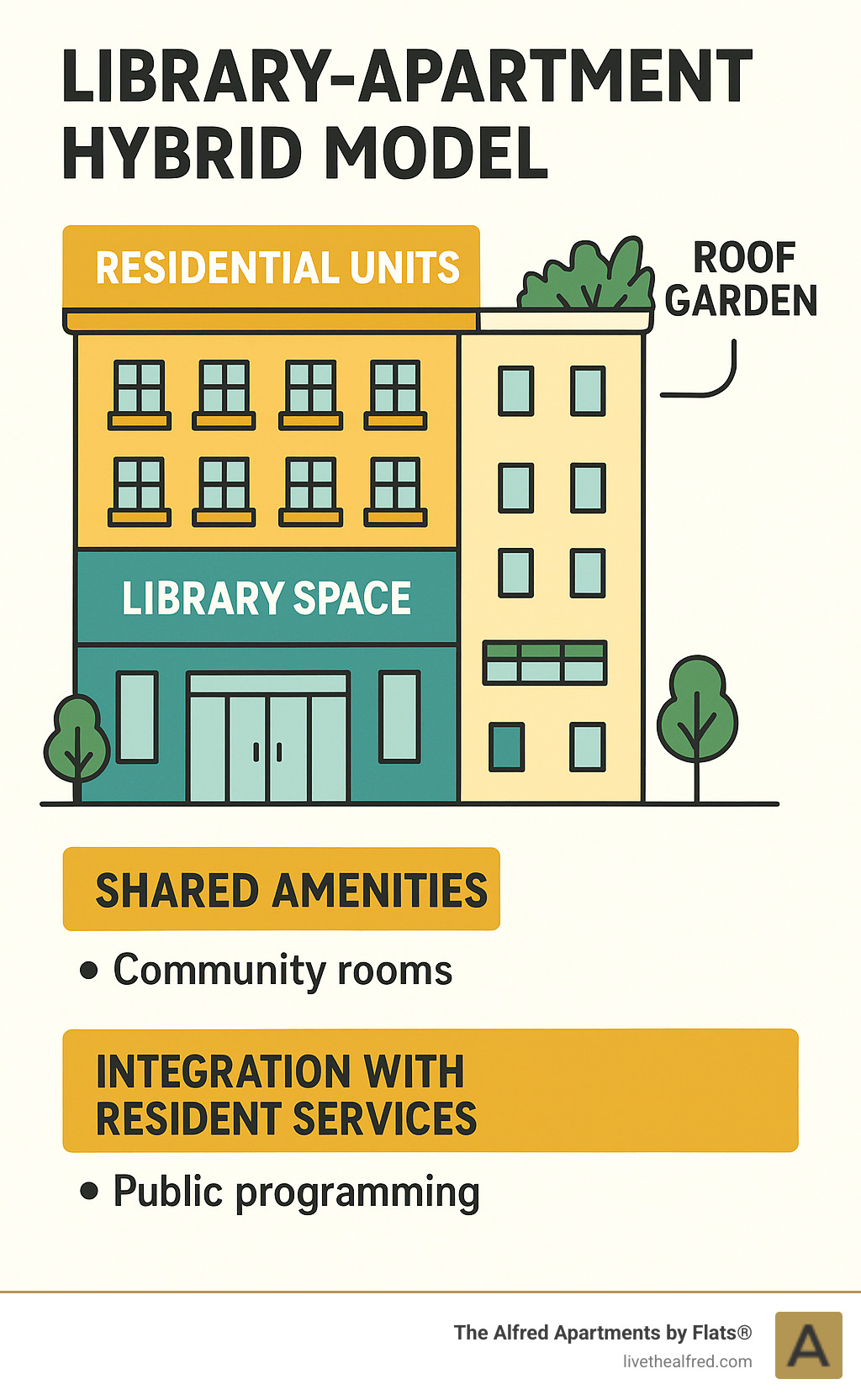
These aren't your typical apartment buildings. Each development features shared community rooms that serve both residents and library visitors, creating natural opportunities for neighbors to connect. Many include roof gardens that double as outdoor programming spaces, and all have achieved LEED certification for their sustainable design.
The buildings specifically focus on affordability, with most units reserved for people earning 60% or less of the area's median income. Many residents qualify for CHA vouchers, ensuring they pay no more than 30% of their income toward rent. This makes quality housing accessible to people who might otherwise struggle in Chicago's competitive rental market.
What makes these developments particularly special is how they've earned recognition far beyond Chicago. The architectural community has celebrated them as models for how cities can address housing needs while strengthening communities.
Northtown Library & Apartments Highlights
The Northtown development in West Ridge stands as Chicago's crown jewel of library-apartment integration. This 44-unit building serves residents aged 62 and older, with every apartment reserved for households earning 60% or less of the area median income.
Walking into Northtown, you immediately notice how thoughtfully everything connects. A shared entry courtyard welcomes both residents and library visitors, while the garden terrace on the second floor provides residents with a peaceful outdoor space that's also available for special library programming.
The building's design makes life easier for residents in countless small ways. Color-coded recessed balconies help people identify their units from the street, while the entire building incorporates senior-friendly design elements throughout. Thirty of the one-bedroom units receive project-based vouchers from the Chicago Housing Authority, making the development accessible to people with very limited incomes.
The recognition has been impressive. Northtown earned the AIA/ALA award and was featured in Interior Design Magazine's Best of Year awards. The award-winning design demonstrates how thoughtful architecture can serve individual residents while strengthening the broader community.
Taylor Street & Little Italy Branch Snapshot
The Taylor Street development represents the largest and most ambitious of Chicago's library-apartment hybrids. With 73 units spread across seven stories above a 14,000-square-foot library, this project shows how mixed-income housing can work within library-integrated developments.
The unit mix creates a genuinely diverse community: 37 Chicago Housing Authority units, 29 affordable units, and 7 market-rate units. This economic diversity helps create a more integrated community while ensuring that the majority of units remain affordable to working families.
Residents enjoy access to a fitness center and outdoor deck, plus the full programming calendar of the Little Italy Branch Library. The building achieved LEED Silver certification, reflecting its commitment to sustainable design and operation.
The project's success has created one significant challenge: the estimated 25-year waitlist for all unit sizes. This extraordinary demand highlights how much people want this type of housing in Chicago.
Independence Library & Apartments Facts
The Independence development offers 40 units exclusively for residents aged 62 and older, with all units income-restricted to households earning 60% or less of area median income. The building combines one- and two-bedroom apartments with a 16,000-square-foot library branch.
Exercise facilities and an outdoor terrace provide residents with amenities that complement the library's programming spaces. The development includes maker lab access, giving residents opportunities to engage with technology and creative projects that many people never get to try.
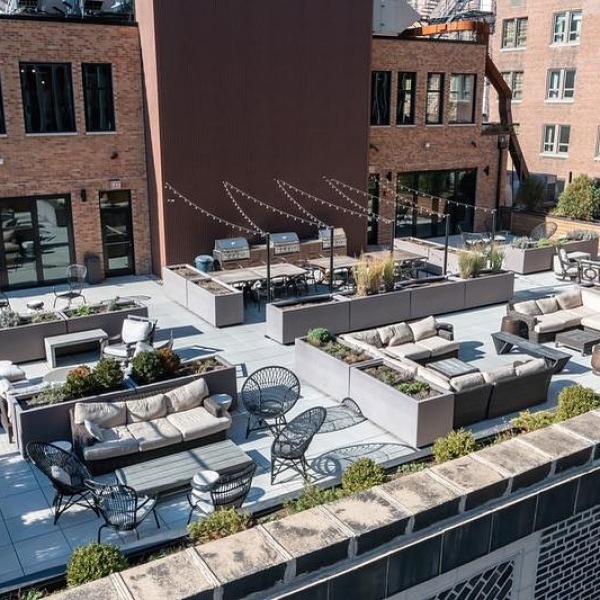
The building's design emphasizes how indoor and outdoor spaces can work together. The roof garden above the parking area serves both residents and library patrons, creating a shared outdoor space that demonstrates how thoughtful design can create community amenities that benefit everyone.
How to Rent Apartments Near Chicago Public Library
Finding the perfect apartments near Chicago public library requires understanding two very different rental markets. The integrated library-apartment developments operate more like affordable housing programs, while traditional rentals in library-adjacent neighborhoods follow standard market practices.
The library-apartment hybrids aren't your typical rental experience. These developments prioritize community building and affordability over quick move-ins. Think of them as specialized housing programs that happen to include incredible amenities rather than standard apartment complexes.
The application process feels more like applying for a mortgage than renting an apartment. You'll need extensive documentation, and patience becomes your most important qualification. But for those who qualify, these developments offer something truly unique in Chicago's housing market.
apartments near Chicago public library: Eligibility & Affordability
The eligibility requirements are straightforward but strict. Most library-apartment developments require residents to be at least 62 years old, with household income limits typically set at 60% of Area Median Income. Some units accept households with even lower incomes through various subsidy programs.
Income verification goes beyond just showing pay stubs. You'll need to document all sources of income, assets, and household composition. The screening process includes credit checks and background reviews, though the standards often differ from market-rate rentals.
Project-based vouchers through the Chicago Housing Authority cover many units, ensuring qualifying residents pay no more than 30% of their income toward rent. This deep affordability makes these developments accessible to people living on fixed incomes who might otherwise struggle in Chicago's expensive rental market.
The mixed-income approach at Taylor Street shows how these developments can serve diverse populations while maintaining affordability. Market-rate units help subsidize the affordable components while creating more economically integrated communities.
apartments near Chicago public library: Application Steps & Wait Times
Getting started means heading to the Chicago Housing Authority's online portal. The application process requires extensive documentation - income statements, asset verification, household composition details, and sometimes home visits as part of the screening process.
Here's where reality sets in: wait times are measured in decades, not months. The Taylor Street development currently has estimated wait times exceeding 25 years for all unit sizes. The Northtown development is fully leased with no current availability.
These extended wait times reflect Chicago's enormous demand for affordable housing, especially housing that includes the community amenities available in library-adjacent developments. The limited supply of these unique housing options means getting on waiting lists early becomes crucial for future consideration.
For those ready to begin the application process, you can apply through CHA to access current applications and waiting list information.
Comparing Unit Types & Typical Rent Ranges
| Unit Type | Square Footage | Market Rate Range | Subsidized Rate |
|---|---|---|---|
| Studio | 727 sq ft | $950-$2,000 | 30% of income |
| 1-Bedroom | 750-900 sq ft | $1,200-$2,500 | 30% of income |
| 2-Bedroom | 969 sq ft | $1,495-$3,995 | 30% of income |
The market rate ranges reflect comparable units in similar neighborhoods, while subsidized rates depend entirely on individual household income. Chicago Housing Authority vouchers ensure that qualifying residents never pay more than 30% of their income toward rent, regardless of the unit's market value.
For those seeking immediate availability with library access, exploring traditional rentals near major branches like Harold Washington Library Center might offer more realistic timelines while still providing the benefits of library-adjacent living.
Beyond the Stacks: Neighborhood Life & Mobility
Living near Chicago's libraries means more than just having books nearby - it means being connected to some of the city's most walkable, transit-friendly neighborhoods. The library locations were chosen specifically for their accessibility and community connections.

The Northtown development boasts a Walk Score of 83, which means you can handle most daily errands on foot. Between the Transit Score of 50 and Bike Score of 70, residents have solid options for getting around without a car. The CTA bus and train connections make downtown Chicago easily accessible, while the expanding bike lane network turns cycling into a practical choice for daily transportation.
Divvy bike stations near most library locations extend your reach for errands and recreation. You're not limited to just your immediate block - the whole neighborhood becomes walkable when you can hop on a bike for longer trips. The city's bike infrastructure keeps improving, making two-wheeled transportation both convenient and enjoyable.
For those planning visits to these neighborhoods, getting directions to library locations shows just how well-connected these areas are. The transit options and walkability scores tell the story of neighborhoods designed for community living.
What's Around Each Branch
The Northtown area reflects Chicago's multicultural character in its shopping and dining options. Residents walk to grocery stores, restaurants, and medical centers without needing to plan around parking or traffic. The neighborhood's diversity means you'll find everything from family-owned markets to established chain stores within easy reach.
Taylor Street sits in the heart of Little Italy, surrounded by historic restaurants that have been serving the community for generations. The local markets still carry specialty items you won't find elsewhere, and the University of Illinois at Chicago campus nearby adds energy and amenities to the area. Students and longtime residents create a dynamic mix that keeps the neighborhood lively.
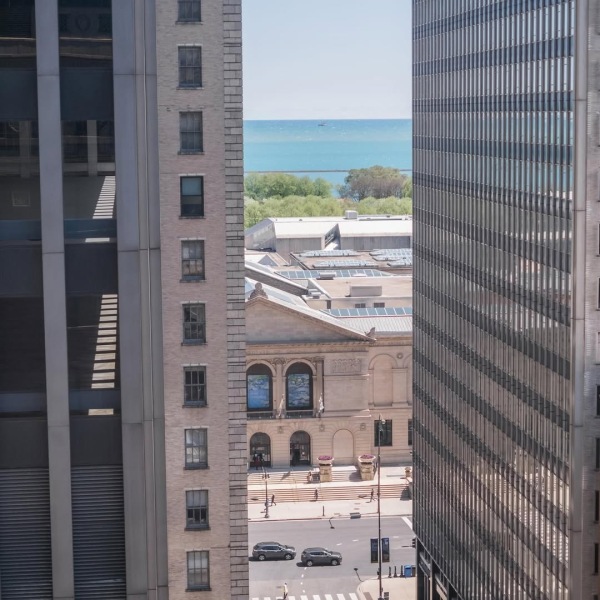
The Independence Library location downtown provides unparalleled access to Chicago's cultural attractions and employment centers. Residents can walk to Millennium Park for outdoor concerts, visit the Art Institute for world-class exhibitions, and choose from countless dining and entertainment options. The lakefront trail system offers miles of walking and cycling paths right at your doorstep.
Each location also connects residents to green space - whether through nearby parks, the lakefront trail system, or the roof gardens integrated into the library-apartment buildings themselves. Even in dense urban areas, these developments prioritize access to outdoor space and natural areas.
Comparing to Traditional Rentals
The library-apartment developments offer community engagement opportunities that traditional rentals simply can't match. Residents regularly mention how the shared programming and spaces help them connect with neighbors and feel part of something larger than just a housing complex.
The social impact extends beyond individual residents. These developments serve as community anchors, bringing together people of different ages and backgrounds through shared library programming. The intergenerational connections that develop can be particularly valuable for residents who might otherwise experience social isolation in typical apartment buildings.
The buildings themselves foster community through thoughtful design features like shared terraces, community rooms, and the natural gathering spaces that libraries provide. Traditional apartment buildings rarely offer comparable opportunities for organic social interaction. When your building includes spaces where neighbors naturally meet - whether for book clubs, technology classes, or cultural events - relationships develop more easily.
From a practical standpoint, having library services integrated into the building provides amenities that would be expensive to duplicate privately. High-speed internet, printing services, meeting rooms, and programming spaces all become available to residents at no additional cost. These services would typically require separate subscriptions or fees in traditional rental situations.
The stronger community connections that develop in these buildings often surprise residents. The shared spaces and programming create natural opportunities for neighbors to help each other, whether that's sharing resources, providing informal support, or simply creating the kind of social network that makes city living more enjoyable.
Architectural Accolades & Social Impact
Chicago's library-apartment developments have transformed how we think about community housing. These buildings prove that affordable housing doesn't have to look institutional or feel disconnected from the neighborhoods they serve. Instead, they've become architectural landmarks that neighbors point to with pride.
The recognition from the design community tells the story. The Northtown development earned the prestigious AIA/ALA Library Building Award in 2020, an honor that celebrates the best in library architecture nationwide. Interior Design Magazine named it their Best of Year, and Fast Company featured the project in their World-Changing Ideas series - recognition that goes far beyond typical housing developments.
LEED certification reflects something deeper than just environmental responsibility. The Taylor Street project's LEED Silver certification and other developments' Gold status demonstrate that sustainable design and affordable housing can work together beautifully. These buildings use less energy, create healthier living environments, and cost less to operate over time.
The architectural approach varies by neighborhood, but each building maximizes natural light in both library and residential spaces. The community rooms serve multiple functions throughout the day - morning coffee for residents, afternoon programming for families, evening book clubs for the broader community. Outdoor spaces like roof gardens and terraces benefit everyone, creating gathering spots that traditional apartment buildings rarely offer.
These developments have sparked neighborhood revitalization without displacement. By combining affordable housing with community amenities, they've created anchors that strengthen rather than strain local resources. The reduced land costs from shared public-private partnerships make the economics work in ways that benefit everyone involved.
Design Details Residents Notice
The color-coded balconies and doors at Northtown aren't just pretty - they're practical. Residents mention how easy it is to find their way home, especially helpful for older residents who might struggle with navigation. These thoughtful touches show up throughout the buildings, from wayfinding graphics to intuitive layouts.
Double-height glazed lobbies create something special - visual connections between library and residential spaces while maintaining privacy. Residents can see library activities from their lobby, creating a sense of community energy without compromising their home environment. It's like having a window into neighborhood life right in your building.
Natural light gets priority treatment in every space. Strategic window placement and interior design choices ensure that both library areas and apartments feel bright and welcoming. These buildings avoid the institutional feel that sometimes characterizes affordable housing by emphasizing openness and warmth.
Accessibility features go well beyond code requirements. Wide corridors, accessible bathrooms, and elevator access ensure that residents with mobility challenges can fully participate in building and library activities. The buildings were designed with real people in mind, not just regulations.
Safety features integrate seamlessly into the design without creating a fortress-like atmosphere. Residents feel secure while still enjoying the open, welcoming environment that makes these developments special community gathering places.
For those interested in experiencing thoughtful architectural design in downtown Chicago living, these library-adjacent developments demonstrate how good design can improve community life in ways that benefit everyone involved.
Frequently Asked Questions About Library-Adjacent Living
Do these apartments allow non-seniors?
Most of Chicago's library-apartment developments focus specifically on residents aged 62 and older. This isn't just an arbitrary rule - it reflects the genuine community need for affordable housing options that work well for people in this age group.
The apartments near Chicago public library developments were designed with programming and amenities that naturally complement the interests and needs of residents in their 60s and beyond. Library programming often includes technology classes, book clubs, and cultural events that appeal to this demographic.
However, there's some flexibility in the system. The Taylor Street development includes units available to younger residents through its mixed-income approach, though these represent a small portion of the total units available.
How much can I expect to pay in rent?
The beauty of these developments is that rent is based on what you can actually afford, not arbitrary market rates. If you qualify for Chicago Housing Authority vouchers, you'll never pay more than 30% of your income toward rent - whether that's $500 per month or $1,500 per month.
Even without vouchers, the rent caps based on Area Median Income limits keep costs reasonable for qualifying households. The exact amount depends on your household size, income, and the specific unit you're approved for.
The income-based approach means that people living on fixed incomes can actually afford to live in well-designed buildings with exceptional amenities. It's a refreshing change from the typical Chicago rental market where costs keep climbing regardless of what people can realistically pay.
Can anyone use the library spaces after hours?
The library spaces follow standard Chicago Public Library schedules, so they're not available to the general public after hours. However, residents often have access to certain community rooms and programming spaces outside regular library hours.
The specific arrangements vary by building, but the goal is always to balance resident privacy with public access to library services. Some buildings have community rooms that can be reserved by residents for private events or meetings.
The integration is designed thoughtfully - you get the benefit of living steps away from library resources during operating hours, plus some exclusive access to shared spaces when the library is closed. It's one of those perks that makes apartments near Chicago public library developments feel special compared to traditional rentals.
Conclusion
Living near Chicago's libraries opens up a world of possibilities that goes far beyond having books at your fingertips. Apartments near Chicago public library locations offer a unique lifestyle where community connection, cultural enrichment, and urban convenience come together in ways that traditional housing simply can't match.
The library-apartment developments we've explored represent something special in urban housing. These buildings prove that affordable housing doesn't have to mean sacrificing community or cutting corners on design. Instead, they show how thoughtful planning can create homes that actually improve residents' daily lives while strengthening entire neighborhoods.
The success of these projects has caught attention nationwide, with Chicago leading the way in showing how libraries and housing can work together. The long waiting lists tell the story - people recognize the value of living in a place where community programming, maker spaces, and cultural events are literally part of home.
Even if the integrated developments aren't an option for you, the broader idea of choosing housing based on community resources makes sense for anyone who wants more from their neighborhood. Chicago's libraries offer incredible programming, free resources, and genuine community connections that can transform urban living from isolated to engaged.
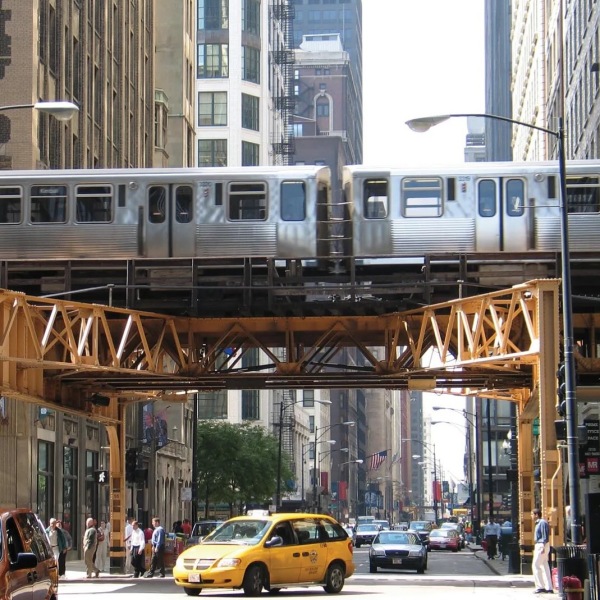
The Loop offers its own version of library-adjacent living, with Harold Washington Library Center serving as a cultural anchor for downtown residents. This massive library provides all the resources and programming that make library-adjacent living so appealing, right in the heart of the city's most connected neighborhood.
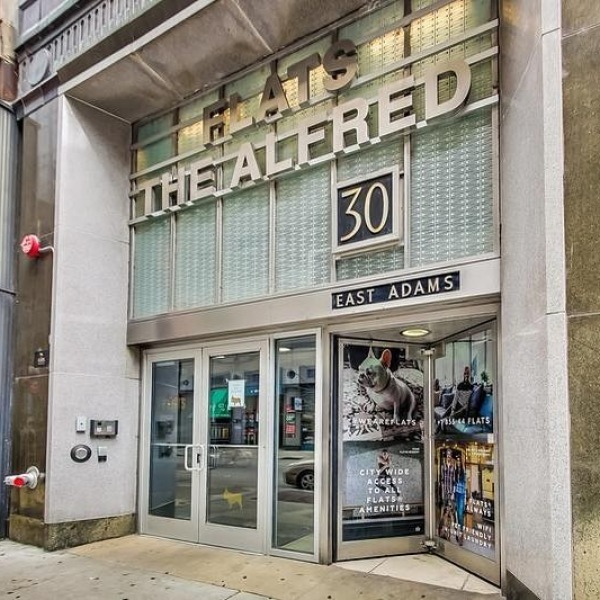
At The Alfred Apartments by Flats®, we understand why people seek out locations near cultural and community resources. Our downtown location puts you within easy walking distance of Harold Washington Library Center and all the cultural richness that downtown Chicago offers. The blend of historic charm and modern convenience creates the kind of liftd city living that makes every day feel a little more special.
Ready to experience what makes downtown library-adjacent living so compelling? We'd love to show you how The Alfred combines the best of historic architecture with contemporary amenities in Chicago's most vibrant neighborhood. Schedule a tour and find your new home in the heart of it all.