

What You Need to Know Before Renting with a Cat
Apartments that allow cats are more common than you might think — but the rules vary a lot from building to building.
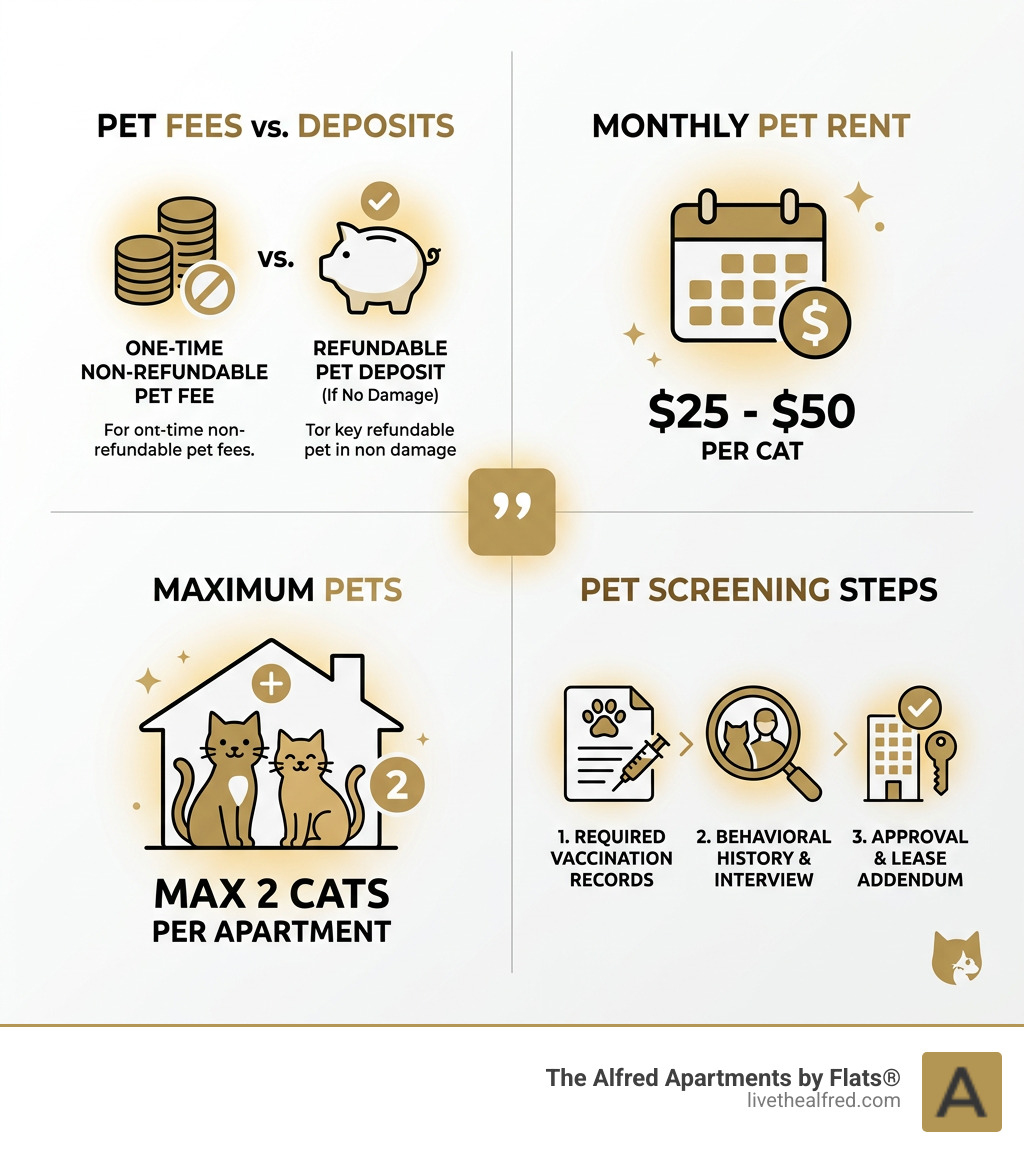
Here's a quick snapshot of what most cat-friendly rental policies look like:
| Policy Element | Typical Standard |
|---|---|
| Pet deposit or fee | Usually $200 or more (one-time) |
| Monthly pet rent | Around $25–$50 per cat |
| Maximum pets allowed | 2 per apartment |
| Breed/type restrictions | Rare for cats, but possible |
| Pet screening required | Increasingly common |
The key difference to know right away: a pet deposit may be refunded if there's no damage, while a pet fee is non-refundable — no matter what.
Most pet-friendly buildings also require you to go through a screening process before move-in. This can include vaccination records and a behavioral history for your cat.
Beyond the paperwork, not all "pet-friendly" apartments are created equal. Some offer cat-specific features like window ledges, natural lighting, and extra space for a litter box setup. Others simply check a box that says pets are allowed and leave it at that.
Whether you're moving to Chicago's Lakeview neighborhood or searching anywhere else, knowing how these policies work before you sign a lease saves you from costly surprises later.
Understanding Pet Policies for Apartments That Allow Cats
When we start our search for a new home, we often focus on the number of bedrooms or the view from the balcony. However, for those of us with feline roommates, the "fine print" regarding pet policies is just as important as the floor plan. In apartments that allow cats, understanding the financial and legal expectations is the first step toward a stress-free move.
Most modern leases include a specific "Pet Addendum." This document outlines exactly what is expected of you and your cat. It covers everything from noise complaints to what happens if your cat decides the baseboards look like a scratching post. One of the most critical things we’ve noticed in the Chicago market is the shift toward a two pet maximum. Even the most cat-loving communities typically draw the line at two feline friends per unit to ensure the living space remains manageable and clean for everyone.
Financial requirements are usually the biggest hurdle. You’ll often encounter a mix of three different charges:
- Pet Deposits: These are often refundable. If your cat is a perfect angel and leaves the carpet in pristine condition, you might see this money again when you move out.
- Non-Refundable Pet Fees: Think of this as a "membership fee" for your cat to live in the building. It’s a one-time payment that the landlord keeps to cover the general wear and tear that animals inevitably bring.
- Monthly Pet Rent: This is a recurring charge added to your monthly rent. It helps the building maintain pet-friendly amenities and covers the increased liability of having animals on-site.
For more detailed guidance on navigating these costs, you can explore more info about cat friendly rentals to see how different communities structure their agreements.

Breed and Type Restrictions in Apartments That Allow Cats
You might think breed restrictions are only for our canine counterparts, but that isn't always the case. While it's true that you won't often see a "restricted list" for Siamese or Maine Coons, insurance policies often dictate what kind of animals can reside in a building. These rules are usually non-negotiable because they are tied to the building's liability coverage.
For cats, restrictions usually focus on "exotic" or "wild" hybrids. For example, many buildings prohibit Savannah cats or Bengals if they are a high-generation hybrid. These animals are often larger and more active than your standard domestic shorthair, and insurance companies may view them as a higher risk.
Additionally, weight limits can occasionally apply to cats, though they are much more common for dogs. We have seen some luxury buildings implement a 99-pound weight limit per pet. While it's unlikely your cat weighs as much as a small human, these blanket policies are worth checking if you have a particularly "sturdy" pet.
The Pet Screening Process for Apartments That Allow Cats
Gone are the days when you could just show a photo of your cat to a leasing agent and get a thumbs up. Many modern apartments that allow cats now use third-party pet screening services. This process helps property managers maintain a standard level of documentation across the entire community.
When you go through a pet screening, you’ll typically need to provide:
- Vaccination Records: Proof that your cat is up to date on rabies and other essential shots, as recommended by the American Veterinary Medical Association.
- Behavioral History: A self-reported (and sometimes vet-verified) history of your cat’s temperament.
- Photos: To identify the pet and ensure they match the description in the lease.
- Annual Renewals: Most screening profiles must be updated every year to ensure vaccinations haven't lapsed.
There is usually a small profile fee associated with these services, but it provides peace of mind for both the landlord and the tenant. It ensures that every animal in the building is healthy and accounted for, which makes for a safer environment for your cat, too!
Cat-Friendly Amenities vs. Dog-Friendly Features
When we talk about "pet-friendly" buildings, the conversation often gravitates toward dog parks and wash stations. But what about our cats? A truly cat-friendly apartment considers the unique biological and behavioral needs of a feline. Cats experience their environment vertically, whereas dogs live on the horizontal plane.
A building that truly welcomes cats will often feature large windows with deep ledges — perfect for "cat TV" (watching birds and squirrels). They also tend to have layouts that offer "litter box zones" — those tucked-away corners where a box can be placed discretely away from high-traffic areas.
| Feature | For the Dogs | For the Cats |
|---|---|---|
| Outdoor Space | Fenced-in dog patches or runs | Secure, screened-in balconies or "catios" |
| Grooming | Industrial wash stations with tubs | Quiet, low-stress pet spas |
| Indoor Design | Durable, scratch-resistant flooring | Wide window perches and natural light |
| Social | Yappy hours and playgroups | Resident events that focus on pet owners |
If you are looking for a community that balances these needs, check out more info about pet friendly apartment complexes to see how amenities are evolving. Modern urban rentals are increasingly adding "pet spas" that aren't just for golden retrievers; they provide a neutral, clean space for any pet grooming needs.
Vertical space is perhaps the most underrated amenity. High-rise living can feel small to a cat if they are confined to the floor. Look for apartments with high ceilings or built-in shelving where you can create a "cat highway." A cat that can climb is a happy, confident cat!
Essential Tips for Living with Cats in Urban Rentals
Living in a bustling city like Chicago means our cats are often living an entirely indoor lifestyle. This requires a bit of extra effort to keep them stimulated and to keep your apartment in tip-top shape.
First, let's talk about roommates. If you aren't living alone, it is vital to have a clear conversation about your cat before anyone signs the lease. Even if your roommate loves animals, they might have allergies you aren't aware of. Discussing litter box maintenance and "door safety" (ensuring the cat doesn't slip out into the hallway) is essential for a harmonious home.
To keep your cat calm in a noisy city environment, many renters swear by pheromone diffusers. These plug-in devices release a scent that mimics a mother cat's natural pheromones, helping to reduce anxiety caused by city sirens or neighboring construction.
Cleaning is also a major factor. To avoid those non-refundable fees becoming "damage charges" at the end of your lease, we recommend a strict cleaning routine. Using an enzymatic cleaner for any accidents is a must, as it breaks down the proteins that cause recurring smells. Also, investing in high-quality scratching posts and placing them near furniture "danger zones" will save your security deposit.
Finding Cat-Friendly Housing in Chicago and Beyond
Chicago is one of the most pet-friendly cities in the country, but some neighborhoods are more "cat-centric" than others. Areas like Lakeview and The Loop offer a fantastic mix of high-rise luxury and historic charm.
When searching for apartments that allow cats in Chicago, keep an eye on the Walk Score. A high Walk Score (often 93 or above in areas like Lakeview) means you are steps away from boutique pet stores, high-end vets, and cat sitters. In the Loop, you might find a Walk Score of 100, which is the ultimate in urban convenience.
For those who commute, transit access is key. Being near the "L" lines (Red, Purple, or Brown) makes it easy to get across the city to specialized feline veterinarians or emergency clinics. If you are specifically looking within the city limits, you can find more info about pet friendly apartments in Chicago to narrow down your search by neighborhood.
Some Chicago buildings even offer "no pet fee" options for cats, particularly in vintage elevator buildings. These are rare gems that allow you to bring up to two cats without the extra monthly overhead, making them highly sought after by local feline enthusiasts.
Frequently Asked Questions about Cat Friendly Rules
How many cats are typically allowed per apartment?
In almost all managed apartment communities, the limit is two pets per unit. This is a standard rule designed to prevent overcrowding and ensure that the apartment remains in good condition. Even if you have very small cats, three is usually a crowd in the eyes of a landlord!
What is the difference between a pet deposit and pet rent?
A pet deposit is a one-time sum paid at move-in. It is often refundable if your cat doesn't cause damage beyond normal wear and tear. Pet rent is a monthly, non-refundable fee added to your rent. It covers the general "impact" of a pet living in the building and the use of pet-related amenities.
Do apartments have breed restrictions for cats?
While much less common than dog breed restrictions, they do exist. Most restrictions focus on wild hybrids like Savannah or Bengal cats. These rules are almost always set by the building's insurance provider rather than the property manager, which means they are usually non-negotiable.
Conclusion
Finding the perfect home for you and your cat doesn't have to be a chore. By understanding the nuances of pet fees, the importance of vertical space, and the requirements of pet screening, you can move into your new place with total confidence.
At The Alfred, we offer luxury apartments in the heart of The Loop, downtown Chicago. Our community celebrates the blend of historic architecture and modern amenities, providing an elevated city living experience that both you and your cat will love. From our prime location to our thoughtfully designed spaces, we strive to make urban living seamless for pet owners.
If you’re ready to see what luxury feline living looks like in the city, find your next home at our pet friendly apartments in Chicago and join a community that truly understands the bond between a human and their cat.