

Why the City of Chicago Skyline Captivates Everyone Who Sees It
The city of Chicago skyline is one of the most recognized and photographed urban landscapes in the world. Whether you're planning a visit, searching for the best vantage points, or looking to bring a piece of it home as wall art — here's a quick overview of what to know:
Quick answers to what most people want to know:
- Best observation decks: Skydeck Chicago (Willis Tower, 1,353 ft) and 360 CHICAGO (John Hancock Center, 1,030 ft)
- Best ground-level views: Adler Planetarium Skyline Walk, Shedd Aquarium waterfront, Chicago Riverwalk
- Best time to view: Sunset and blue hour for dramatic lighting; weekday mornings to avoid crowds
- Best tours: Architecture boat tours along the Chicago River, helicopter rides over Lake Michigan
- Best skyline wall art styles: Panoramic canvas prints, monochrome long-exposure photography, graphite sketches
Chicago's skyline didn't happen overnight. It was forged from disaster — rebuilt after the Great Fire of 1871 — and went on to give the world some of its first skyscrapers. Today, it blends historic Art Deco structures with sleek modern glass towers along the lakefront.
From the glass-floored Ledge extending 4.3 feet out from the 103rd floor of Willis Tower, to a quiet evening sketch from the Shedd Aquarium waterfront, there are dozens of ways to experience this skyline. And on a clear day from Skydeck Chicago, you can see across four states: Illinois, Indiana, Wisconsin, and Michigan.
This guide covers it all — architecture, viewing spots, photography tips, tours, and how to bring the skyline into your home.

Evolution and Architectural History of the City of Chicago Skyline
To truly appreciate the city of Chicago skyline, it helps to understand the historical crucible that created it. Following the Great Fire of 1871, which devastated central Chicago, architects and developers faced a blank slate. Driven by rapid technological advances, engineers began using structural steel frames and elevator systems, giving birth to modern high-rise innovation.
This post-fire reconstruction period established Chicago as the birthplace of the skyscraper. Over the decades, architectural styles transitioned from structural masonry to ornate Art Deco designs, mid-century modernist steel-and-glass grids, and ultra-modern post-modernist forms.
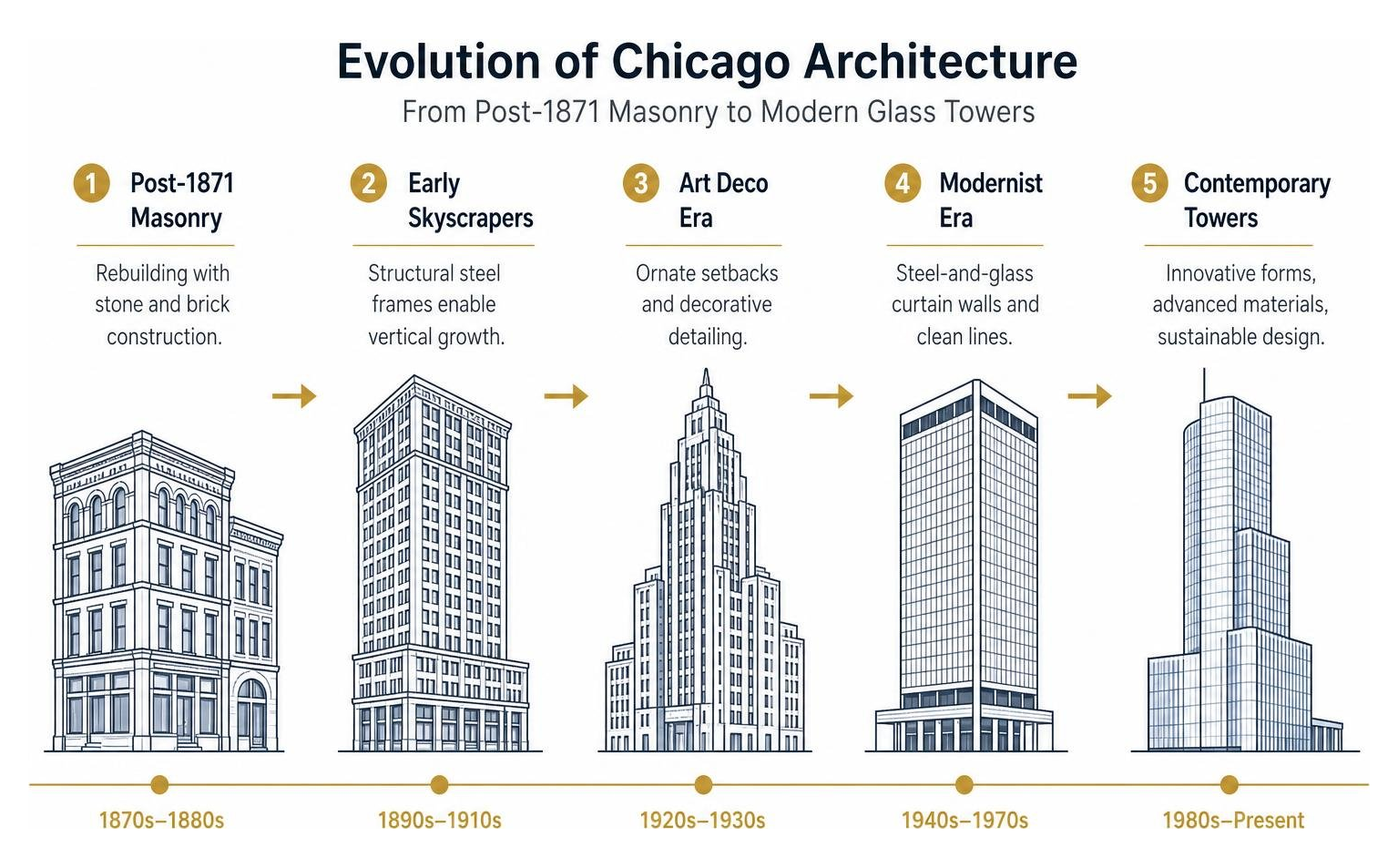
The architectural evolution is visible in every direction across the city landscape. Prominent towers demonstrate how structural design has adapted across generations:
- Aon Center: Built with a stark white facade, this soaring tower anchors the eastern edge of the downtown skyline near Lake Michigan.
- St. Regis Chicago: As one of the newest defining additions to the horizon, its distinctive undulating blue-green glass design creates a dramatic stepped silhouette along the Chicago River and lakefront harbor, as detailed in this chicago high rise guide 2025.
To examine how these landmark structures frame the lakefront, view this Panoramic View Of Chicago Lakefront Skyline High-Res Stock Photo - Getty Images.
Iconic Skyscrapers Defining the Downtown Horizon
When gazing across the horizon, several world-renowned landmarks command immediate attention:
- Willis Tower (formerly Sears Tower): Standing tall as an engineering marvel, its bundled-tube structural design dominated global tall-building rankings for decades and remains an anchor of downtown architecture.
- John Hancock Center (875 North Michigan Avenue): Famous for its visible exterior X-bracing, this tapering skyscraper represents a quintessential example of structural expressionist design.
- 340 on the Park: Located near Millennium Park, this sleek residential high-rise reflects the contemporary shift toward glass curtain walls and sustainable design.
- Crain Communications Building: Known for its striking sloped roof, this building cuts an unmistakable diagonal profile against the sky.
- Prudential Plaza: Representing mid-20th-century growth, this complex bridges historic downtown heritage with modern office space.
Additional details on Loop towers can be found at Chicago skyline and lakefront harbor from the Loop - ChiStockImages.com.
Top Observation Decks and Elevating Viewing Experiences
Experiencing the city of Chicago skyline from hundreds of feet in the air offers an exhilarating perspective on urban geometry. Visitors seeking high-altitude views can head to the top vantage points described in this resource on High Views in Chicago: Observation Decks & Rooftops.
The city boasts world-famous observation platforms that combine sweeping sightlines with interactive architectural engineering:
- Skydeck Chicago (Willis Tower): Situated on the 103rd floor at a height of 1,353 feet (412 meters), Skydeck offers views stretching up to four states on clear days. Its premier attraction is The Ledge, a series of glass boxes extending 4.3 feet outward from the building exterior, placing visitors directly over the city below.
- 360 CHICAGO Observation Deck (John Hancock Center): Located on the 94th floor at 1,030 feet (314 meters), this venue features TILT, an enclosed glass and steel platform that physically tilts outward over Michigan Avenue. It also features stadium-style seating where guests can sip drinks while watching the sun set over the urban grid.
- Navy Pier Centennial Wheel: Standing 196 feet high, this enclosed, temperature-controlled Ferris wheel provides smooth 360-degree views combining Lake Michigan waters with the towering skyline backdrop.
To discover more about finding top elevation points across the downtown area, check out this guide to the best chicago views.
Ground, Water, and Aerial Skyline Tours
If high-altitude viewing platforms aren't enough, there are several dynamic ways to explore urban design from ground, water, and road levels, as highlighted in 7 Ways to Experience the Chicago City Skyline:
- Chicago Riverwalk and Boat Tours: Gliding along the Chicago River provides an up-close architectural canyon perspective. Specialized boat tours feature educational narration highlighting the engineering histories of surrounding structures.
- Helicopter Rides: For a breathtaking aerial view, helicopter tours soar along the Lake Michigan shoreline, delivering aerial panoramas of illuminated skyscrapers against the dark waters.
- DuSable Lake Shore Drive: Driving or biking along Lake Shore Drive yields uninterrupted views of lakefront parks, harbors, and high-rises sweeping along the eastern shoreline.
For an aerial perspective captured at twilight, see this Aerial Chicago Skyline Partially Illuminated At Early Dusk With Iconic Skyscrapers And Lake Michigan Waters Visible Under Romantic Sky In Chicago Illinois Usa High-Res Stock Photo - Getty Images .
Best Vantage Points and Photography Tips
Finding the ultimate vantage point to photograph the city of Chicago skyline requires knowing where the geography works in your favor.

The absolute top ground-level photography locations include:
- Adler Planetarium Skyline Walk: Located on the Museum Campus peninsula, this location delivers the single most classic panoramic composition of downtown Chicago, capturing both North and South Loop towers along Lake Michigan.
- Shedd Aquarium Waterfront: Positioned just south along the shore, this spot provides a slightly lower angle that emphasizes the contrast between harbor waters and massive skyscrapers.
- Michigan Avenue Bridge: Sitting over the Chicago River, this vantage point surrounds photographers with historic stone facades and sleek glass towers.
When shooting from distance, equip your camera with a wide-angle lens (16mm–35mm focal length) to capture the wide span of high-rises. If you are shooting from an elevated position, such as this guide to the best apartments balcony chicago, using a sturdy tripod allows you to slow your shutter speed and catch crisp architectural details.
Capturing the City of Chicago Skyline at Sunset and Blue Hour
Timing is everything in urban landscape photography. To photograph the skyline at its absolute best:
- Golden Hour: The hour preceding sunset bathes reflective glass windows in warm gold, copper, and orange tones.
- Blue Hour: Occurring roughly 20 to 40 minutes after sunset, blue hour offers a rich deep-blue sky color that balances perfectly against glowing window lights and floodlit building crowns.
- Weather Considerations: Clear days offer maximum visibility, but crisp atmosphere after a rain shower or dramatic cloud formations often yield far more compelling photographic contrast.
- Long Exposure & Reflections: Using exposures of 10 to 30 seconds smooths out harbor waves and transforms building lights into shimmering color reflections across Lake Michigan.
Bringing the Chicago Skyline Home: Decor and Fine Art
The dramatic geometry of the downtown skyline makes it a natural focal point for home interiors. From grand living room displays to refined home office accents, artwork featuring urban landscapes adds sophistication and structure to residential spaces, aligning with the aesthetic of downtown chicago luxury living.
When selecting skyline wall art, consider these options:
- Canvas Prints: Stretched canvas options create a clean, contemporary borderless look that works seamlessly in modern spaces.
- Framed Fine Art Photography: Printed on acid-free archival paper with gallery matting, framed prints protect image pigments from fading over time while delivering classic presentation.
- Custom Sizing: Choose larger panoramic prints (such as 24x36 or 30x40 inches) as central wall statements over sofas, or select smaller framed prints (8x10 or 11x14 inches) for gallery walls and shelving.
Framing the City of Chicago Skyline: Wall Art Styles and Formats

Different artistic mediums highlight different characteristics of the city's built environment:
- Monochrome Long Exposure: Black-and-white long-exposure shots emphasize architectural stability against smooth cloud movement and silky water reflections. Explore an example through the Monochrome Long Exposure Chicago Skyline Poster by Dan Sproul - Dan Sproul.
- Graphite & Ink Sketches: Hand-drawn line art and sketches capture urban detail with fine-line warmth.
- Modern Color Photography: High-contrast night shots highlight the vibrant glowing energy of downtown corridors. Browse options like the Chicago Skyline Art Print – Society6 or explore rooftop perspectives at Chicago Skyline from the Rooftop Art Print by Gregory Ballos - Gregory Ballos .
Frequently Asked Questions About the Chicago Skyline
What is the best location for photographing the Chicago skyline?
The Museum Campus peninsula — specifically the Adler Planetarium Skyline Walk and the waterfront path near Shedd Aquarium — provides the most comprehensive ground-level view of the entire downtown horizon framed by Lake Michigan.
How high are Chicago's main observation decks?
Skydeck Chicago at Willis Tower sits on the 103rd floor at 1,353 feet (412 meters) above ground, while 360 CHICAGO at the John Hancock Center sits on the 94th floor at 1,030 feet (314 meters) high.
What are the most prominent skyscrapers in the Chicago Loop skyline?
Key prominent skyscrapers include Willis Tower, Aon Center, St. Regis Chicago, the Crain Communications Building, and the John Hancock Center.
Conclusion
The city of Chicago skyline stands as a magnificent testament to structural innovation, resilience, and artistic design. From ground-level riverwalk views to towering high-altitude observation decks, experiencing Chicago's architecture offers endless inspiration.
At The Alfred, appreciation for Chicago's built environment is part of everyday living. Located in the heart of The Loop, the community combines restored historic architectural charm with elevated modern finishes. To discover what it's like to live surrounded by iconic high-rise architecture, explore available skyline view apartments chicago today.