

Why Vintage Clothing Stores Are Your Gateway to Unique Style
Vintage clothing stores offer curated collections of authentic fashion pieces that are at least 20 years old, sourced from past decades and often featuring designer labels, unique silhouettes, and quality craftsmanship no longer found in modern fast fashion.
Quick Guide to Vintage Shopping:
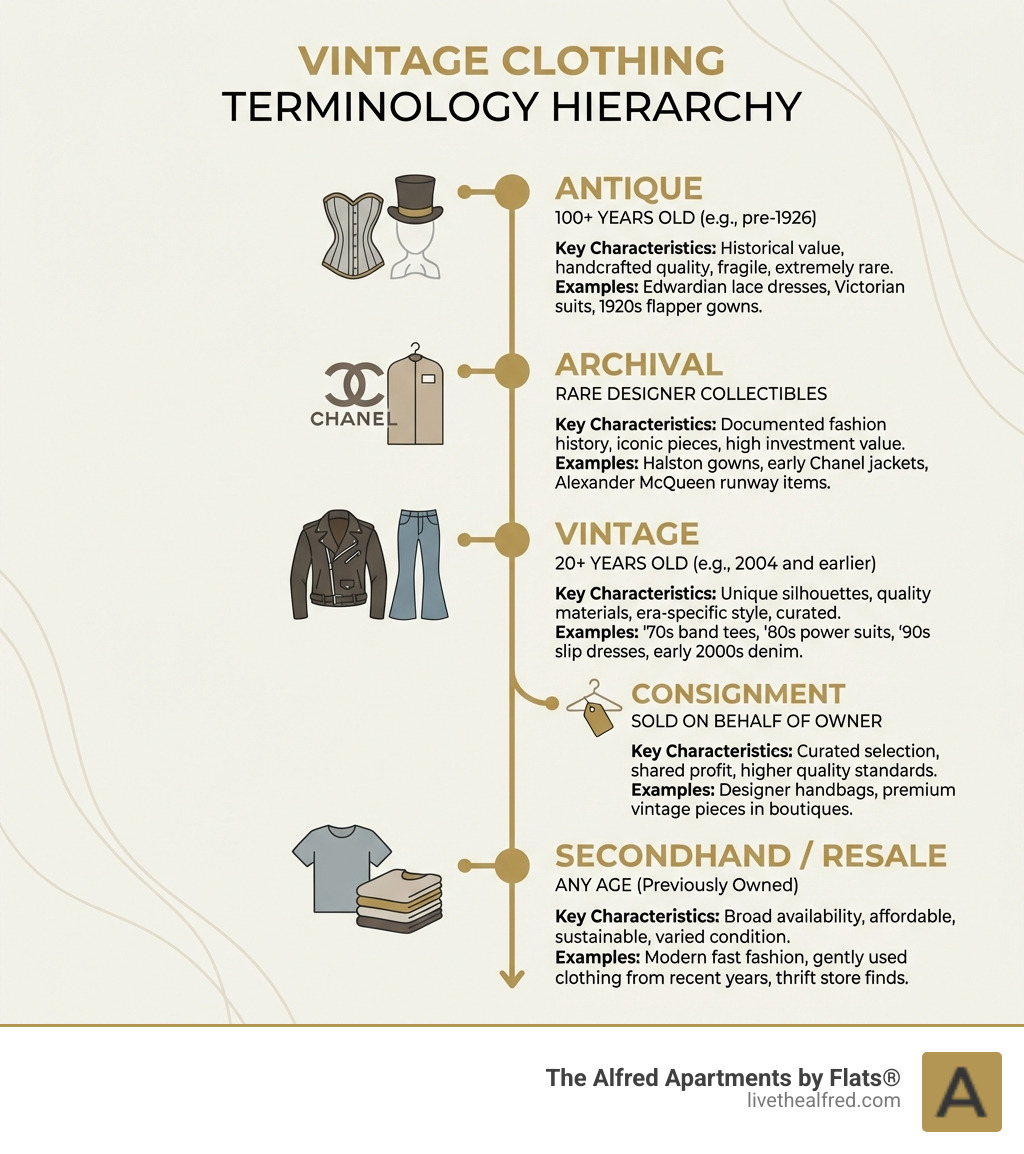
- Vintage = 20+ years old (anything before 2004)
- Antique = 100+ years old
- Secondhand/Resale = previously owned, any age
- Consignment = items sold on behalf of owner
- Archival = rare, collectible designer pieces
Ask any fashion enthusiast what they're wearing, and "it's vintage!" has become the answer nine times out of ten. Whether you're hunting for a rare designer handbag, a perfectly worn leather jacket, or a cocktail dress that tells a story, vintage clothing stores have transformed from dusty thrift shops into curated destinations for style-conscious shoppers.
The vintage market has exploded in recent years, driven by both sustainability concerns and the desire for one-of-a-kind pieces. Online platforms and physical boutiques now offer everything from museum-worthy Halston gowns to trendy '90s band tees, making it easier than ever to build a wardrobe that's uniquely yours.
For urban professionals seeking to stand out in a sea of mass-produced fashion, vintage stores provide access to quality construction, timeless silhouettes, and the thrill of finding something truly special. The hunt itself becomes part of the appeal—sifting through racks of history to find that perfect piece no one else will own.
Defining the Era: What Makes a Piece Truly Vintage?
Understanding the nuances of the market is the first step to becoming a savvy shopper. While many people use the terms interchangeably, there are industry-standard definitions that separate a true historical treasure from a simple used shirt.
The gold standard for the 20-year rule dictates that for a garment to be considered "vintage," it must have been produced at least two decades ago. As of right now, that means anything from 2004 and earlier officially makes the cut. While it might be hard for some of us to accept that the "aughts" are now vintage, the fashion world moves fast!
Antique vs. Vintage
The distinction between antique and vintage is primarily one of age. An item must be at least 100 years old to earn the "antique" label. These pieces are often delicate and require specialized care, frequently found in high-end galleries or specialized boutiques like 1stdibs.
Secondhand, Resale, and Consignment
These terms refer to the ownership history rather than the age of the garment.
- Secondhand/Resale: A broad umbrella for anything previously owned. A shirt from a fast-fashion brand bought last year and sold today is secondhand, but it certainly isn't vintage.
- Consignment: This is a business model where a store sells an item on behalf of the original owner and takes a percentage of the sale. Many vintage clothing stores in Chicago operate on this model to keep their inventory fresh and high-end.
- Archival Fashion: This refers to rare, often runway-specific pieces from iconic designers. These are the "holy grail" items sought after by collectors and museums.
The Best Online Vintage Clothing Stores for Every Style
The digital age has revolutionized how we hunt for gems. No longer are we limited to the shops within walking distance; we now have access to global archives at our fingertips.

The RealReal
If you are looking for authenticated luxury, this is a top-tier destination. While it is a powerhouse for recent-season designer resale (think finding a Marc Jacobs steal from three years ago), it also houses a significant collection of authenticated vintage luxury. It is ideal for those who want the security of professional authentication.
Depop
A hybrid of a social media app and a thrift shop, Depop is where the younger generations flock for trendy, "it-girl" vintage. It’s the place to find '90s streetwear, Y2K aesthetics, and unique pieces made famous by influencers.
Other Notable Platforms:
- Vestiaire Collective: A global marketplace that received a massive boost when luxury giant Kering invested in it. Great for high-end European labels.
- eBay: The original frontier. It requires patience and "practiced eyes," but the variety is best.
- Etsy: Excellent for mid-century pieces (1940s–1960s) and supporting small, independent curators.
- 1stdibs: Think of this as the "discerning older sister" to Etsy. It’s where you go for museum-level quality and antique jewelry.
Sought-After Designers and Iconic Labels
Certain names carry a weight that transcends time. When we browse vintage clothing stores, we are often on the lookout for:
- Chanel and Hermès: For their timeless construction and investment value.
- Emilio Pucci: Famous for those bold, psychedelic prints that defined the '60s and '70s.
- Vivienne Westwood: A must-have for those seeking the rebellious spirit of the '70s punk era or '90s avant-garde.
- Halston: Known for the effortless glamour of the disco era.
- 90s Minimalists: Labels like Jil Sander or early Prada that defined the sleek, understated look of the late 20th century.
Navigating the Market: Online vs. In-Person Shopping
There is a constant debate in the fashion community: is it better to click or to browse? Both have their merits, especially in a city as vibrant as Chicago.
| Feature | Online Shopping | In-Person Shopping |
|---|---|---|
| Selection | Global access; millions of items | Limited to store inventory |
| Tactile Experience | Cannot feel fabric or check weight | Can inspect seams, zippers, and feel |
| Sizing | Risky; requires exact measurements | Can try on immediately |
| Authentication | Often relies on photos/digital certs | Can inspect labels and hardware yourself |
| Gratification | Must wait for shipping | Immediate purchase and use |
| Curation | Algorithmic or keyword-based | Stylized by local boutique owners |
In Chicago, we are lucky to have a rich landscape of physical shops. From the hip, curated racks at Knee Deep Vintage to the expansive selections in the South Loop, the in-person experience allows for that "serendipitous find" that an algorithm simply can't replicate.
Strategies for Successful Hunting
Finding the perfect piece isn't just about luck; it's about strategy. Whether you're hitting the local boutiques or scouring the web, we recommend a few "pro" approaches.
Keyword Mastery
When shopping online, generic terms like "vintage dress" will overwhelm you. Be specific. Search for "1960s silk shift dress," "1980s power shoulder blazer," or "1970s Levi's 501 orange tab." Knowing the specific terminology of an era open ups the best results.
Seasonal Buying
The best time to buy a vintage wool coat is in July. Vintage clothing stores often have more inventory for off-season items, and you won't be competing with the autumn rush.
Estate Sales and Bulk Warehouses
For those who love the "dig," keep an eye out for estate sales in historic neighborhoods. These are often goldmines for pristine, one-owner collections. Some shops also hold bulk warehouse sales where you can find incredible pieces if you're willing to put in the time to sift.
Pro Tips for Finding Treasures at Vintage Clothing Stores
- Inspect the Hardware: Vintage zippers (like Talon or CC) and heavy-duty buttons are great indicators of age and quality.
- Look at the Seams: High-quality vintage often features generous seam allowances and hand-finished hems, allowing for easier tailoring.
- Identify the Fabric: Natural fibers like silk, wool, and linen hold their value and age better than early synthetics.
- Date the Label: Researching brand logos can help you pinpoint the exact year a garment was made. For example, a "Made in British Hong Kong" label usually dates a piece between the 1950s and 1997.
The Significance of Provenance and Authentication
In high-end vintage, "provenance" is everything. It refers to the history of the garment—who owned it, where it was worn, and its journey through time.
Why Authenticity Matters at Vintage Clothing Stores
When you are investing in a designer piece, authentication is your safety net.
- Counterfeit Detection: Especially with brands like Gucci or Louis Vuitton, fakes have existed for decades. Knowing how to spot a "vintage fake" vs. a "vintage original" is a skill that professional curators at stores like Blogger Armoire or The RealReal provide.
- Archival Integrity: For collectors, having the original tags or a documented history (like a piece being from a specific runway show) can drastically increase the value.
- Construction Techniques: Real luxury vintage often uses techniques like French seams or hand-rolled hems that are rarely seen in modern replicas.
Sustainability and the Future of Fashion
The rise of vintage clothing stores is inextricably linked to the growing movement toward ethical consumption. By choosing vintage, we are participating in a circular economy.
Every vintage garment purchased is one less item contributing to the environmental toll of fast fashion. It reduces waste, saves the water used in new textile production, and honors the craftsmanship of the past.
Social media has played a massive role here. Platforms like Instagram and TikTok have turned vintage hunting into a community event. Initiatives like the "Monday Night Market" on Instagram allow local sellers to connect directly with buyers, creating a vibrant, modern marketplace for historical style.
Frequently Asked Questions about Vintage Fashion
How do I know if a vintage item is high quality?
Look for natural fibers, heavy-duty hardware, and intricate construction details like lining and finished seams. High-quality vintage should feel substantial, not flimsy.
What is the difference between consignment and thrift stores?
Thrift stores generally rely on donations and have a wide, uncurated variety of items. Consignment stores are curated; the shop chooses specific items to sell on behalf of owners, usually resulting in higher-quality, designer-heavy inventory.
How has social media changed the vintage market?
Social media has made vintage "trendy" and accessible. It has allowed small sellers to reach a global audience without a physical storefront and has educated consumers on how to style older pieces in a modern way.
Conclusion
Embracing vintage is about more than just clothes; it’s about connecting with history and expressing an individual style that can't be bought off a department store rack. In a city like Chicago, where history is woven into the very architecture of our streets, shopping vintage feels like a natural extension of our urban lifestyle.
At The Alfred, we appreciate the beauty of the past. Our luxury apartments in The Loop are housed in a beautifully restored historic building, blending the character of Chicago’s architectural heritage with the modern conveniences of today. Just as a vintage Chanel jacket brings timeless elegance to a contemporary outfit, living at The Alfred offers an liftd experience that honors the city's history while looking firmly toward the future.
Ready to find your perfect fit in the heart of the city? Explore the neighborhood and find why The Loop is the ultimate destination for those who value style, history, and a unique way of living.