

Connecting Chicago: Your Essential Guide to the 'L' System
CTA train stations form the backbone of Chicago's public transportation network, connecting residents and visitors across the city and surrounding suburbs through 145 stations on eight distinct train lines.
Quick Facts About CTA Train Stations:
- Total Stations: 145 stations across 224.1 miles of track
- Train Lines: 8 color-coded lines (Red, Blue, Brown, Green, Orange, Pink, Purple, Yellow)
- 24/7 Service: Red and Blue Lines run around the clock
- Daily Riders: Nearly 760,000 passengers on average weekdays
- Accessible Stations: 103 stations comply with ADA requirements
- Airport Connections: Direct service to O'Hare (Blue Line) and Midway (Orange Line)
- Newest Station: Washington/Wabash, opened August 31, 2017
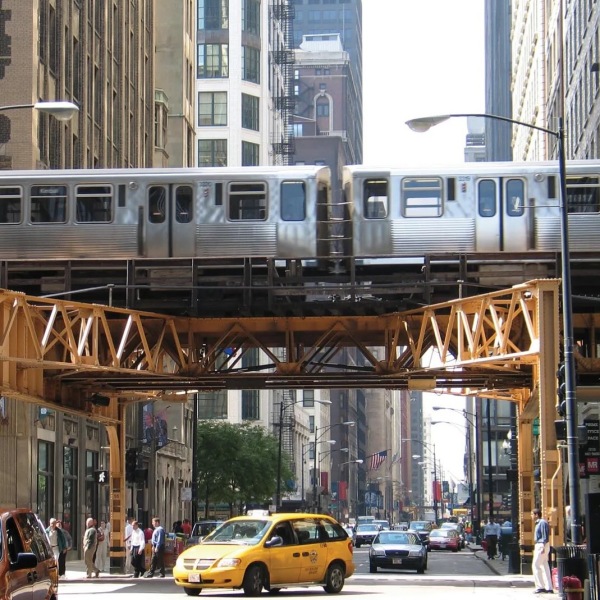
At the confluence of the Chicago River's three branches, the city's transit system has grown from humble 19th-century beginnings into the second-busiest rapid transit system in the United States. What started as three separate companies unified in 1897 with the completion of the Union Loop, creating the distinctive liftd train network that gives Chicago's 'L' its name.
Today, the system uses a hub-and-spoke design radiating from downtown Chicago, making it easy to steer once you understand the basics. Whether you're commuting to work, heading to a museum, or catching a flight, the 'L' connects you to virtually every corner of the city.
This guide breaks down everything you need to know about CTA train stations - from which lines serve which neighborhoods to how to find accessible stations and steer key transfer points.
Getting to Know the 'L': Chicago's Eight Train Lines
The Chicago Transit Authority (CTA) operates the comprehensive rapid transit system affectionately called the 'L' (short for "liftd," though parts run underground and at street level too). This network is the heartbeat of Chicago, moving nearly 760,000 passengers on an average weekday through a colorful web of eight distinct lines.
Each line has its own personality, identified by a unique color that makes navigation simple once one gets the hang of it. The system follows a hub-and-spoke design, with most lines radiating from the central downtown area known as The Loop. This setup makes getting around the busy city remarkably efficient, whether for commuting to work or exploring Chicago's diverse neighborhoods.
Red Line • Blue Line • Brown Line • Green Line • Orange Line • Pink Line • Purple Line • Yellow Line
Red Line
Think of the Red Line as Chicago's urban lifeline. This north-south workhorse runs from Howard in the north all the way down to 95th/Dan Ryan in the south, cutting straight through the heart of the city.
A key feature of the Red Line is its 24/7 service. No matter when one needs to travel—whether it's rush hour or three in the morning—the Red Line is running. It's the busiest line in the system by far, serving an impressive 98,148 passengers daily. Commuters, night shift workers, and late-night revelers all depend on this reliable route.
Blue Line
The Blue Line provides a direct connection to the world. It links downtown Chicago to O'Hare International Airport, making it incredibly convenient for travelers. The line runs from the far northwest side, winds through downtown, and extends west to Forest Park.
Like the Red Line, the Blue Line operates 24/7, which is useful for those with early morning flights or late-night arrivals. Living near a Blue Line station means always being connected—whether for catching a flight, commuting downtown, or exploring the city's west side neighborhoods. For that kind of convenience, there are apartments near the Blue Line in Chicago.
Brown Line
The Brown Line offers a scenic commute through North Side neighborhoods. This liftd line curves from Kimball on the northwest side into The Loop.
The route provides unique views of Chicago's architecture and residential streets, allowing passengers to watch the urban landscape shift as they travel.
Green Line
Serving Chicago's West and South Sides, the Green Line connects communities from Harlem/Lake in the west to both Ashland/63rd and Cottage Grove in the south. This line has witnessed significant historical change over the decades and continues to evolve alongside the vibrant neighborhoods it serves.
The Green Line provides crucial transit links across diverse communities, connecting residents to downtown and to each other.
Orange Line
For travelers flying through Midway International Airport, the Orange Line is a direct route downtown. This line efficiently connects Chicago's Southwest Side to The Loop, making airport travel straightforward.
The Orange Line is recognizable by its bright, distinctive trains and direct route. It's designed for quick travel, whether for catching a flight or heading home after a trip.
Pink Line
The Pink Line serves the West Side and Near West Suburbs, running from 54th/Cermak into The Loop. For portions of its route, it shares tracks with other lines, showing how the intricate web of CTA train stations connects throughout the system.
This line offers a convenient connection for residents in these areas to reach downtown Chicago quickly and easily.
Purple Line
The Purple Line primarily serves Chicago's northern suburbs, running from Linden in Wilmette down to Howard. What makes this line particularly valuable for commuters is its express service to The Loop during weekday rush periods.
That express service provides a faster commute for residents of Evanston and other northern communities who need to get downtown efficiently. It's a popular choice for suburban commuters who work in the city.
Yellow Line
The shortest and most unique line, the Yellow Line—often called the Skokie Swift—connects Skokie-Dempster to Howard. It's a rapid shuttle service designed to efficiently move passengers between the suburb of Skokie and the main 'L' network at Howard station.
While it serves the fewest daily passengers at just 1,212, it plays a crucial role for the community it connects. The Yellow Line also holds a unique distinction: it's the only 'L' line that doesn't pass through The Loop.
Navigating the System: A Look at CTA Train Stations
With 145 CTA train stations spanning 224.1 miles of track, Chicago's 'L' system creates an intricate web connecting neighborhoods, suburbs, and everything in between. The naming system is straightforward—most stations take their names from the streets or intersections where they're located, while others honor nearby neighborhoods or landmarks. Understanding this logic makes navigation intuitive.
The CTA Facts at a Glance page offers a wealth of operational details about the transit system.

Finding Information on CTA Train Stations
Planning a journey is straightforward. Whether a rider needs a station address, current schedules, fare information, or real-time service updates, the necessary resources are available online.
The CTA's Station Information page provides comprehensive details on every station in the system. Information includes everything from entrance locations to connecting bus routes.
For a full suite of tools—schedules, fare management, system maps, service alerts, and live train tracking—the Ventra platform consolidates all transit needs in one place, simplifying trip planning and payment.
It is highly recommended to check for service alerts before heading out. Construction, weather, and special events can affect service, and knowing about changes ahead of time can help avoid unexpected delays or detours.
Accessibility at CTA Train Stations
Chicago's transit system belongs to everyone, and that means ensuring it works for everyone. The CTA takes accessibility seriously, with 103 of the 145 'L' stations designed to accommodate passengers with disabilities in full compliance with the Americans with Disabilities Act (ADA).
These accessible CTA train stations feature elevators and ramps that make platform access straightforward. Once on board, designated wheelchair securement areas are available in every train car, providing a comfortable ride on any line.
The commitment to accessibility extends beyond the 'L' as well—every CTA bus route uses accessible vehicles equipped with lifts and ramps available upon request. This comprehensive approach allows for planning trips throughout the city.
For a complete list of accessible stations and detailed information about available services, visit the CTA's Accessible Stations page. Because navigating Chicago on the 'L' should be an option for everyone, regardless of mobility needs.
From Past to Present: The Evolution of the 'L'
Chicago's 'L' system has a story that is an integral part of the city. In the late 19th century, three separate private companies had the vision to construct liftd railways above the city's busy streets. It was a significant engineering feat for its time, and these early lines eventually came together in 1897 when the Union Loop was completed downtown. This iconic structure created the interconnected liftd railway that gives the area its distinctive character and its name, "the Loop."
For decades, these private companies kept Chicago moving. But by the mid-20th century, they struggled financially. Rather than let this vital transportation network crumble, the city stepped in. In 1947, the Chicago Transit Authority (CTA) was created to take over operations, changing private enterprise into public service. It was a turning point that ensured generations of Chicagoans would continue to rely on the 'L' for their daily journeys.

System Growth and Modernization
The 'L' system is one of continual evolution. While some CTA train stations closed over the years as neighborhoods and the city's needs shifted, the system has also seen significant growth and modernization that keeps it relevant for today's riders.
The Washington/Wabash station, for instance, opened on August 31, 2017, bringing a contemporary aesthetic to the Loop. Its design, improved accessibility features, and modern amenities demonstrate the results of investment in transit infrastructure. It has quickly become a notable station.
Further projects are underway. Construction kicked off in December 2023 for a new Green Line stop at Damen Avenue, which will serve West Side communities and support continued neighborhood growth. Additionally, the Red Line Extension Project will extend the system's busiest line further south, connecting more neighborhoods to the heart of the city. Advance construction work began in summer 2024, marking a major milestone for this significant project. More information about this development is available at Advance Construction Work to Begin on the Red Line Extension This Summer.
These improvements demonstrate the city's ongoing commitment to the 'L' system for today and tomorrow. From its 19th-century origins to modern stations, the 'L' continues to be a key connection for Chicago.
A Guide to Riding the 'L': Maps, Transfers, and Destinations
Getting around Chicago on the 'L' becomes intuitive once one understands a few basics. The Ventra card system is used for fares, which makes hopping on and off trains throughout the day convenient. The Red and Blue Lines operate 24/7, while other lines have specific operating hours. Many lines also offer extended "Night Owl" service for late-night travel. It is advisable to check the schedule for a specific line before heading out, especially when traveling during the early morning hours or late at night.

Maps and Real-Time Information
CTA maps serve as a roadmap to the entire city. The comprehensive system maps show all train and bus lines, plus connections to regional services like Metra. When navigating downtown, the detailed Loop maps are particularly helpful, showing the intricate web of CTA train stations and how they connect to nearby attractions and landmarks. These resources, including an interactive web-based version, can be found on the Web-based System Map - CTA page.
A particularly useful tool is the Train Tracker. This feature provides real-time train arrivals, so riders know exactly when the next train will pull into the station, reducing guessing and unnecessary waiting on the platform. It is also strongly recommended to check service alerts before traveling. These alerts notify riders of any planned maintenance, delays, or route changes. They can be found on the CTA website or through the Ventra app, helping to plan around any disruptions and ensure a smooth journey.
Key Transfer Points
The Loop serves as the heart of the transit system, where multiple lines intersect and make transfers easy. Clark/Lake station is one of the busiest transfer hubs, connecting the Blue, Brown, Green, Orange, Pink, and Purple Lines all in one place. Just a few blocks away, Jackson station offers another major free transfer point for the Blue, Brown, Orange, Pink, and Purple Lines, providing flexibility in how to steer downtown.
Moving north, Fullerton station connects the Brown, Purple, and Red Lines, making it a crucial junction for North Side travel. On the South Side, Roosevelt station brings together the Green, Orange, and Red Lines, well-positioned for accessing Museum Campus and nearby parks. Up at the city's northern edge, Howard station serves as the terminus where the Purple, Red, and Yellow Lines meet, creating a gateway between Chicago and its northern suburbs. The 'L' system also connects with Metra commuter rail and the South Shore Line, extending travel options throughout the entire Chicagoland region.
Exploring Chicago via the 'L'
Chicago's 'L' system puts the entire city within easy reach. CTA train stations serve as gateways to Chicago's attractions, from world-renowned museums to lakefront parks.
An 'L' ride provides direct access to Millennium Park, home to the famous Cloud Gate sculpture, where art, architecture, and green space come together. Theater lovers can catch Broadway-caliber shows in the Theater District, with several stations located steps from the marquee lights. For those seeking apartments-in-theater-district, the proximity to these cultural gems is a significant benefit.
Navy Pier offers its Ferris wheel, restaurants, and Lake Michigan views, all easily accessible via the 'L'. The Museum Campus brings together three of Chicago's prominent institutions—the Field Museum, Shedd Aquarium, and Adler Planetarium—with convenient transit connections making a full day of discovery easy. Those considering apartments-near-millennium-park-chicago recognize the value of this instant access.
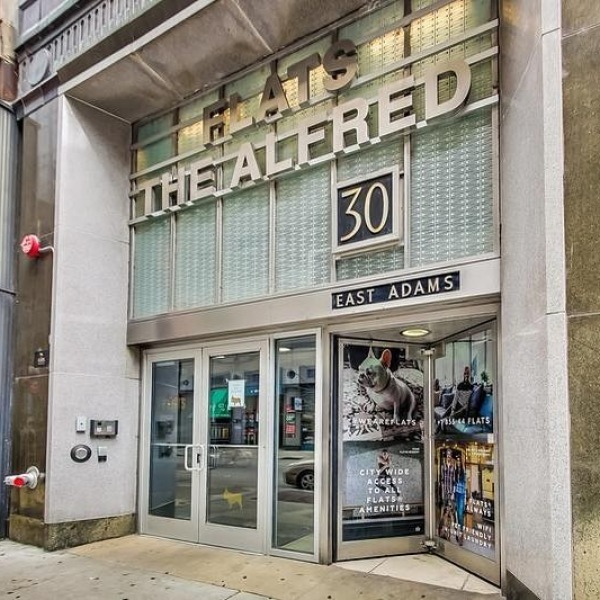
Living downtown means the entire city becomes an extended neighborhood. The 'L' connects residents to dining along the chicago-riverwalk-dining scene, weekend explorations of diverse neighborhoods, and everything in between. The Alfred Apartments are positioned in the Loop to take full advantage of these connections. Whether for commuting to work, meeting friends across town, or finding a new favorite spot, the 'L' makes it possible. This is what liftd city living is like—the ability to explore Chicago with convenience built into daily life.
Frequently Asked Questions about the 'L' System
For those new to Chicago or just getting familiar with the transit system, here are answers to some common questions.
How many CTA train stations are there?
Chicago's 'L' system includes 145 CTA train stations spread across its eight color-coded lines. These stations serve not just Chicago itself, but also seven surrounding suburbs, creating a regional transit network. Whether heading to work in the Loop, catching a flight at O'Hare, or visiting friends in Evanston, there is likely a station nearby to reach the destination.
Do CTA trains run 24 hours a day?
It depends on which line is being taken. The Red and Blue Lines offer 24/7 service on their entire routes, which is convenient. This round-the-clock operation means it is always possible to get to both major airports, move between the North and South Sides, or travel through downtown at any hour of the day or night.
The other six lines have specific operating hours, though many extend their service late into the evening. Several lines also run "Night Owl" service during overnight hours, providing additional options for late-night commuters and night owls. It is always suggested to check the schedule for a specific line before heading out, especially when traveling during very early morning or late-night hours.
How do I pay for my ride on the 'L'?
Paying for a ride is straightforward. Most riders use a Ventra Card, which can be purchased and reloaded at any station vending machine. It can be loaded with transit value or a pass, then tapped at the turnstile when entering a CTA train station.
For a single ride or a short visit to Chicago, a Ventra ticket can be purchased directly from a station vending machine. These disposable tickets work just like the reusable cards.
For added convenience, a personal contactless bankcard—either a credit or debit card with the contactless payment symbol—can also be used. The card is tapped at the fare gate in the same way as a Ventra Card.
Conclusion
Chicago's 'L' system allows for travel at any hour to new destinations within minutes. More than just tracks and trains, the CTA train stations connect the city's neighborhoods, people, and possibilities.
Whether catching an early morning Red Line to work, taking the Blue Line to O'Hare for a weekend getaway, or exploring a new neighborhood on a Sunday afternoon, the 'L' is available. It is a reliable and convenient system that makes city living feel easy.
For those living in chicago-loop-apartments like The Alfred, the 'L' is part of the daily rhythm. Residents are moments away from the entire city. Grabbing dinner along the Riverwalk, checking out a show in the Theater District, or spending an afternoon at Millennium Park are all just a quick train ride away.
Living downtown means being in the middle of the action, with the ability to explore wherever the day leads. The 'L' makes this possible, turning Chicago into an extended neighborhood.
To experience downtown living with excellent transit access, Explore the neighborhood and see what makes The Alfred a convenient home base for Chicago adventures.