

Why Designer Lighting Transforms Studio Apartments
Designer lighting studio apartments use layered light — not just one overhead bulb — to make small spaces feel larger, more functional, and genuinely beautiful.
Quick answer: The top designer lighting strategies for studio apartments:
- Layer ambient, task, and accent lighting — at least 3–4 light sources per room
- Use wall sconces and flush mounts instead of bulky floor lamps to save floor space
- Choose warm bulbs (2700K–3000K) for living and sleeping zones; cooler (4000K+) for workspaces
- Define zones with light — different brightness levels replace physical walls
- Add mirrors and reflective surfaces to amplify every light source you have
- Go smart — dimmable, voice-controlled bulbs let one room shift from work mode to wind-down mode instantly
Studio apartments come with a real challenge: one room has to do everything. It's your living room, bedroom, office, and dining area — all at once.
Most studios ship with a single overhead fixture. And that one ceiling light? It flattens the space, creates awkward shadows, and makes even a well-colored room feel a little like a waiting room.
Good lighting changes all of that. It creates depth, defines zones, sets the mood, and — done right — makes a 500-square-foot studio feel like a considered, curated home.
The spaces that pull this off aren't just well-lit. They're thoughtfully lit. That's the difference between a studio that feels cramped and one that feels intentional.
The Art of Layering Designer Lighting in Studio Apartments
In interior design, lighting is often referred to as "invisible architecture." This is especially true in Studio Apartments Near Chicago, where physical walls are scarce. To make one room feel like a complete home, we must move away from the "one-and-done" overhead light fixture and embrace the art of layering.
Layered lighting involves three distinct types of illumination that work together to create visual depth and functionality:
- Ambient Lighting: This is your general overhead light. It provides the base level of brightness so you can move around safely. In a designer context, this might be a sleek plafond or a series of recessed LEDs that offer even, soft coverage without taking up vertical space.
- Task Lighting: This is focused light for specific activities. Think of a slim desk lamp for your WFH setup, under-cabinet LEDs in the kitchen, or an adjustable reading light by the bed.
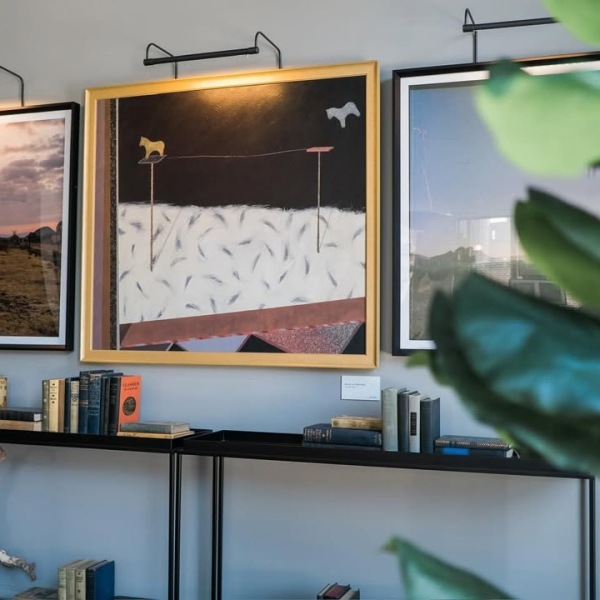
- Accent Lighting: This is the "jewelry" of the room. It highlights architectural features, artwork, or bookshelves. It adds the "wow" factor that makes a space feel high-end.
According to insights from Lighting Design Studio New York - Apartment LEDs - Archilume, using a limited but high-quality material palette alongside integrated LEDs can unify diverse spaces into a continuous, loft-like gesture. By placing lights at different heights—low (floor level or under-furniture strips), mid (table lamps), and high (ceiling fixtures)—we create an environment that feels three-dimensional rather than flat and clinical.
When selecting bulbs, pay attention to Kelvins (color temperature) and Lumens (brightness). For a cozy, residential feel, we recommend warm white bulbs between 2700K and 3000K. These mimic the soft glow of a sunset and are much more welcoming than the harsh, blue-toned lights often found in office buildings.
Strategic Fixtures to Maximize Square Footage
In a studio, floor space is the most valuable currency. Traditional floor lamps, while stylish, often have large bases that eat into your walking paths or furniture placement. To maintain an open feel in Studio Apartments Downtown, we look toward verticality and wall-mounted solutions.
Wall Sconces and Verticality
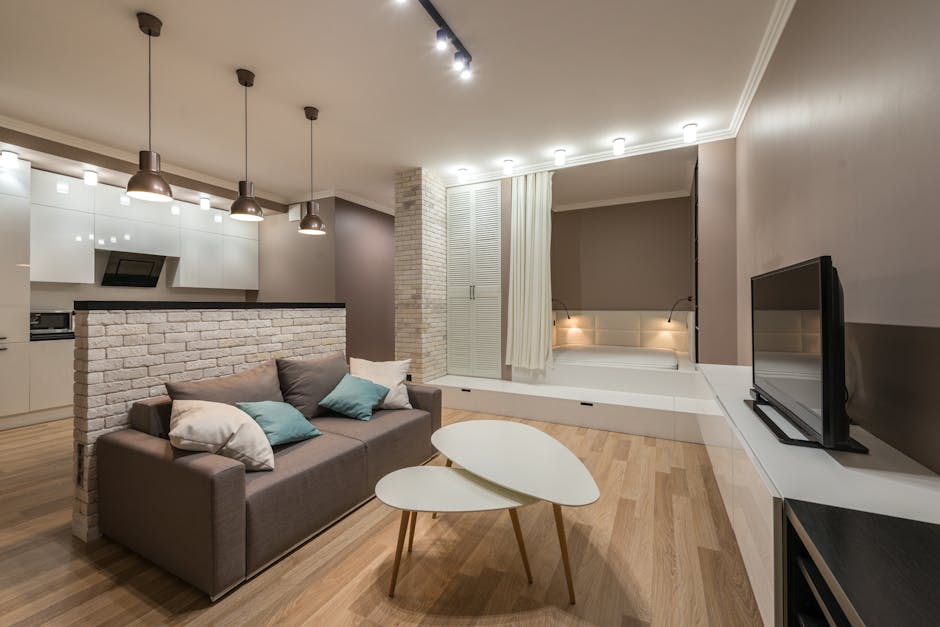
Wall sconces are a game-changer for designer lighting studio apartments. By mounting your light sources directly to the wall, you free up end tables and floor corners. Modern swing-arm sconces are particularly effective because they can be adjusted to serve as task lighting for reading or pivoted toward the wall to provide soft, reflected ambient light.
Flush Mounts and Track Lighting
If your ceilings are lower, avoid large, dangling chandeliers that can make the room feel "heavy." Instead, opt for designer plafonds (flush mounts) with slim profiles. Another excellent option is track lighting or "busbars." These allow you to have multiple light points from a single ceiling outlet, which you can aim at different parts of the room—one toward the kitchen, one toward the closet, and one toward the gallery wall.
Pendant Lights
Pendant lights are perfect for defining a specific area, like a small dining nook or a kitchen island. They act as a visual anchor, telling the eye, "This is a separate room," without needing a physical divider.
Zoning with Designer Lighting Studio Apartments
Zoning is the secret to successful studio living. In an open-concept layout, lighting acts as a visual boundary. As noted in Laying Out a Studio Is Tricky, But This Apartment Makes It Look Easy, using color and light to separate the lounge from the sleeping area creates a sense of order.
For High-rise Studios Chicago, we suggest using a combination of area rugs and targeted lighting to create "rooms within a room." For example, a warm floor lamp placed next to a yellow sofa defines the living zone, while a softer, dimmer bedside lamp signals the transition to the sleeping zone. This prevents the "chaotic" feeling where your bed, office, and kitchen all seem to bleed into one another.
Using Light as Invisible Architecture
Great design is about how a space feels, not just how it looks. In historic buildings or converted warehouses, architectural details are the star of the show. We can use lighting to emphasize these features, creating a sense of history and luxury.
Architectural lighting techniques like cove lighting—where LEDs are hidden in a recessed pocket—can make a ceiling appear to float, adding height to the room. This technique was famously used in the 7th Street Apartment No. 02, where recessed fluorescent lights were used to heighten architectural perception and create a serene, ethereal atmosphere.
For those enjoying the Perks of Studios Apartment in Chicago The Loop, maximizing sightlines toward natural light sources is key. By placing reflective surfaces or light-colored furniture near windows, you can pull natural light deeper into the apartment, making the space feel airy and connected to the city outside.
Smart Features for Designer Lighting Studio Apartments
Modern luxury is defined by convenience and control. Integrating smart home technology into your designer lighting studio apartments setup allows you to change the entire vibe of your home with a single tap or voice command.
Systems like Lutron Caseta or smart bulbs allow you to:
- Automate Routines: Set a "Work Mode" with bright, cool light during the day and a "Relax Mode" with dimmed, warm tones for the evening.
- Control from Anywhere: Never worry if you left the lights on when you headed out to the Loop.
- Adjust Color Temperature: Some smart bulbs can shift from blue-white (great for focus) to amber (perfect for winding down) based on the time of day, supporting your natural circadian rhythm.
This level of control is a staple in Studio Apartments West Loop Chicago, where high-tech amenities meet high-end design.
Enhancing Light with Interior Elements
Lighting doesn't work in a vacuum; it interacts with every material in your home. To make your designer lighting studio apartments shine, consider the following elements:
- Mirrors: Placing a large mirror opposite a window or a light source effectively doubles the amount of light in the room. It’s a classic designer trick that makes any small space feel twice as big.
- Reflective Surfaces: Metallic accents (gold, brass, or polished chrome) and glass furniture help bounce light around the room rather than absorbing it.
- Neutral Palettes: As seen in the DUMBO APARTMENT - BROOKLYN, NEW YORK | STUDIO OCRA, a base of neutral tones and soft wood finishes creates a calm, grounded atmosphere that allows natural and artificial light to take center stage.
- Sheer Curtains: Swap heavy drapes for linen or sheer panels. This provides privacy while still allowing soft, diffused sunlight to fill your studio.
Common Pitfalls in Small Space Illumination
Even with the best intentions, it's easy to make mistakes that leave a studio feeling cramped or uninviting. Here are the most common pitfalls to avoid in Downtown Chicago Studio Rentals:
- Relying on a Single Overhead Source: This is the quickest way to make a beautiful apartment feel sterile. Always aim for at least three light sources.
- Using the Wrong Bulb Temperature: Avoid "daylight" bulbs (5000K+) in living and sleeping areas; they can feel like a hospital or a convenience store. Stick to the 2700K–3000K range for comfort.
- Oversized Fixtures: A massive chandelier might look great in a ballroom, but in a studio, it can feel like it's "eating" the room. Scale your fixtures to the size of your furniture.
- Cluttered Cords: Nothing ruins a designer aesthetic like a tangled web of black cords. Use cord clips, sleeves, or hide them behind furniture legs to keep the look clean.
- Neglecting Dark Corners: Every corner should have a purpose and a light. A dark corner effectively disappears, making your square footage feel smaller than it actually is.
Frequently Asked Questions about Studio Lighting
How can lighting make a small studio feel larger?
Lighting makes a space feel larger by eliminating shadows and creating "layers." When you illuminate the walls and corners rather than just the center of the floor, the boundaries of the room seem to recede. Using vertical lighting (like wall sconces or tall, slim floor lamps) also draws the eye upward, making the ceilings feel higher.
What is the best color temperature for a multifunctional studio?
For a space that serves as a kitchen, office, and bedroom, versatility is key. We recommend using smart bulbs that can adjust their temperature. If that's not an option, go for a "warm white" (3000K). It’s bright enough for cooking and working but soft enough to feel like a home rather than an office.
How do I light a studio apartment that has no ceiling fixtures?
This is a common scenario in historic buildings. The solution is to use "plug-in" options. Swag pendant lights can be hung from the ceiling and plugged into a wall outlet. Plug-in wall sconces offer the high-end look of permanent fixtures without the need for wiring. Additionally, use a mix of floor lamps (for height) and table lamps (for mid-level warmth) to fill the space.
Conclusion
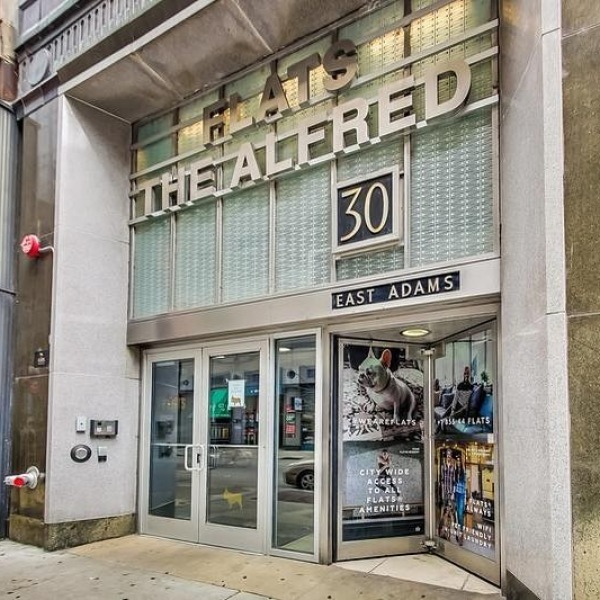
At The Alfred Apartments by Flats®, we believe that your home should be a reflection of your lifestyle, regardless of its square footage. Our luxury apartments in The Loop combine the grandeur of historic architecture with the sleekness of modern amenities. By applying these designer lighting studio apartments principles, you can transform our thoughtfully designed spaces into a personalized urban sanctuary.
Whether you are working from home with a view of the Chicago skyline or winding down after a day in the city, the right lighting makes all the difference. Ready to see how luxury and history come together? Explore our luxury floor plans and find your perfect bright spot in downtown Chicago.