

What Is a Football Bar (and Why It Belongs in Your Training)?
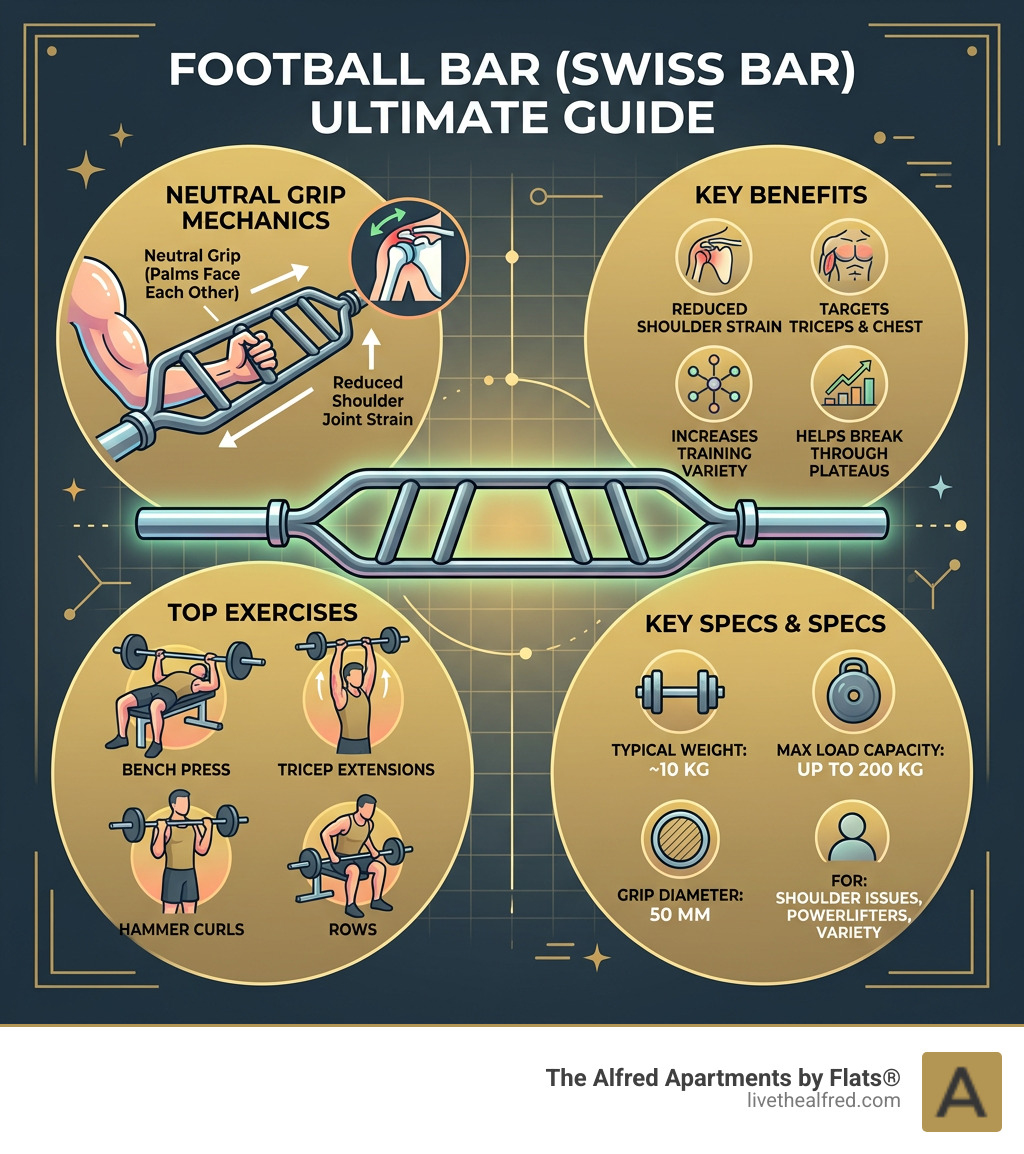
A football bar — also called a Swiss bar or multi-grip bar — is a specialty barbell with multiple parallel or angled handles that let you press, row, and curl with a neutral grip (palms facing each other). It was originally designed to help American football players train through shoulder injuries without aggravating the joint.
Quick answer: Here's what you need to know about football bars at a glance:
| Feature | Details |
|---|---|
| Also known as | Swiss bar, multi-grip bar |
| Primary benefit | Neutral grip reduces shoulder strain |
| Best exercises | Bench press, tricep extensions, hammer curls, rows |
| Typical weight | ~10 kg |
| Max load capacity | Up to 200 kg |
| Grip diameter | 50 mm |
| Who it's for | Lifters with shoulder issues, powerlifters, anyone wanting training variety |
If you've ever felt nagging shoulder discomfort on a standard barbell bench press, you're not alone. The straight bar forces your wrists and elbows into a fixed, often unnatural position. The football bar solves that by rotating your grip — taking stress off the shoulder joint and putting it exactly where it belongs: your triceps and chest.
It's not just a rehab tool, either. Serious lifters use it to break through plateaus, add variety, and build serious arm size. Think of it as the Swiss Army knife of the weight room — versatile, practical, and surprisingly underrated.
What is a Football Bar and Why Your Shoulders Need It?
When we talk about the football bar, we are looking at a tool that prioritizes joint longevity. Traditional straight barbells force the hands into a pronated (palms down) position. For many of us, this internal rotation of the humerus creates a "pinching" sensation in the shoulder capsule, especially during heavy pressing.
By utilizing a neutral grip, the football bar allows the elbows to tuck naturally by your sides. This alignment is significantly more "joint-friendly," making it a staple for shoulder rehab. Whether you are recovering from an old injury or trying to prevent a new one, changing the angle of your grip can be the difference between a productive workout and a week of icing your rotator cuff. If you're looking for a place to unwind after a heavy session, you can find more info about bars and fitness amenities that complement an active lifestyle.
The Anatomy of a Football Bar
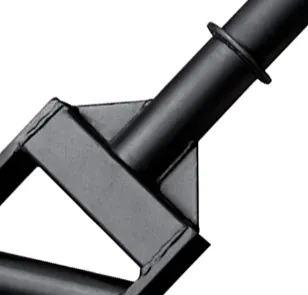
The most striking feature of a football bar is its rectangular frame. Inside this frame, you’ll find several sets of handles. Most high-quality bars feature a mix of straight parallel handles and angled handles. The angled options are often preferred for overhead pressing as they mimic a more natural hand position.
The construction usually involves heavy-duty steel with internal welds to ensure the handles don't wiggle under load. Unlike a standard bar, the weight is distributed across a wider surface area, which changes the center of gravity and forces your stabilizing muscles to work harder.
Primary Uses in Strength Training
While it looks specialized, we find the football bar to be incredibly versatile. Its primary uses include:
- Bench Press Variations: Targeting the triceps more heavily while sparing the shoulders.
- Overhead Pressing: Allowing for a more vertical bar path without hitting your chin.
- Accessory Movements: It is the premier tool for "hammer" style movements.
- Rehab Work: Using lighter loads to retrain pressing patterns without pain.
Key Specifications and Features of the Football Bar
Before you run out and grab the first multi-grip bar you see, it helps to know the "standard" specs. Most Olympic-style football bars are designed to fit into standard power racks, but the internal dimensions can vary.
| Specification | Football Bar (Standard) | Olympic Straight Bar |
|---|---|---|
| Total Length | 2100 mm | 2200 mm |
| Bar Weight | ~10 kg to 20 kg | 20 kg |
| Max Load | 200 kg | 500 kg+ |
| Grip Diameter | 50 mm (Fat) | 28 mm - 29 mm |
| Grip Style | Neutral / Multi-angle | Pronated / Supinated |
Understanding Grip Diameters
One of the first things you’ll notice is the thickness of the handles. Many football bars utilize 50 mm "fat grips." While this might feel chunky at first, it offers a hidden benefit: wrist stability. A thicker grip spreads the pressure across the palm, reducing the "stabbing" sensation some lifters feel in their wrists during heavy extensions. Furthermore, the thicker diameter increases forearm activation, helping you build a stronger grip over time.
Racking and Dimensions
Racking a football bar can be a bit of a puzzle. Because of the flared triangle or rectangular area near the sleeves, some bars can be difficult to seat in standard J-cups. Users often report that the bar can hit the sides of the rack if you aren't perfectly centered. When choosing a bar, ensure the "non-sleeve" portion of the bar is wide enough to clear your specific rack width. For those who enjoy a well-equipped gym environment, exploring bar and games lifestyle options can provide a great social outlet after your workout.
Best Exercises to Master with a Multi-Grip Bar
If you have a football bar at your disposal, don't just use it for benching. It is a powerhouse for upper-body development across the board.
Maximizing the Football Bar Bench Press
The neutral grip bench press is the "bread and butter" of this bar. Because your elbows stay tucked, you’ll find a massive increase in tricep recruitment. We recommend starting with a slightly closer grip than your standard bench. You may find your range of motion increases slightly, allowing the bar to sink deeper toward the chest, which provides a unique stretch to the pectoral muscles.
Accessory Movements for Arm Growth
- Hammer Curls: The neutral handles make this bar the ultimate tool for heavy hammer curls, targeting the brachialis and forearms.
- Skull Crushers: Using the inner handles provides a stable, neutral grip that is much easier on the elbows than a straight bar or even an EZ-bar.
- Seal Rows: Laying flat on a bench and rowing the football bar allows for a deep contraction in the mid-back and lats.
- JM Press: This hybrid move (part bench, part extension) is a favorite among powerlifters for building lockout strength.
Comparing the Football Bar to Traditional Barbells
Is it strictly "better" than a straight bar? Not necessarily, but it is a necessary alternative. Standard barbells are essential for competition-specific training, but the football bar fills the gaps that straight bars leave behind.
According to user reviews, the biggest draw is the immediate relief of joint pain. However, some users note a "rattling" noise in lower-end bars caused by steel slag left inside the hollow frame during manufacturing. It is also worth noting that because the bar is often lighter (10kg vs 20kg), you have to be more mindful of your plate math. If you're looking for a place to discuss your training stats with friends, check out some of the best sports bars in Chicago.
Pros and Cons of Specialty Bars
Pros:
- Shoulder Relief: Significantly reduces the risk of impingement.
- Grip Variety: Multiple handle widths (wide, medium, narrow) in one bar.
- Tricep Focus: Excellent for building lockout strength.
Cons:
- Racking Difficulty: Can be finicky with certain J-cup designs.
- Balance Issues: The bar can "tilt" if your grip isn't perfectly centered.
- No Knurling: Many versions have smooth handles, which can be slippery if your hands are sweaty.
Who Should Use a Football Bar?
We believe almost everyone can benefit from a football bar, but it is particularly essential for:
- Lifters with "Crumbly" Shoulders: If benching hurts, this is your solution.
- Athletes: Especially those in contact sports (like football or rugby) who need to build "pushing" power without overtaxing the joints.
- Home Gym Owners: It provides high "bang for your buck" by replacing several specialty bars.
Safety Tips and Training Alternatives
Using a football bar requires a slight learning curve. Because the bar is wider and has a different center of gravity, it can feel "unstable" during your first few sets.
- Leave Your Ego at the Door: Start with lighter weights than your standard barbell max. The neutral grip changes the leverage, and you might find you are slightly weaker initially.
- Check Your Collars: Standard spring collars sometimes slip on the specialty sleeves of a football bar. We recommend using lock-jaw or screw-down collars for extra security.
- Use a Spotter: Because the bar is bulkier, "dumping" the weight in an emergency is more difficult. Always have a spotter or use safety pins in a rack.
Frequently Asked Questions about Football Bars
Is a football bar better for shoulders than a straight bar?
For the majority of people, yes. The neutral grip keeps the shoulders in a "packed" and externally rotated position, which opens up the subacromial space and prevents the tendon rubbing that causes "swimmer's shoulder" or bench press pain.
How much weight can a standard football bar hold?
Most entry-level Olympic football bars have a recommended max load of around 200 kg (approx. 440 lbs). While this is plenty for most mortals, high-end competition versions can handle significantly more. Always check the manufacturer's specs.
Can I use a football bar for overhead pressing?
Absolutely. Many lifters prefer it for the "strict press" because the neutral grip allows the bar to clear the face more easily, leading to a more efficient, vertical bar path.
Conclusion
The football bar is more than just a niche piece of equipment for professional athletes; it’s a versatile, joint-saving tool that belongs in any serious strength program. Whether you're training in a high-end facility or a garage gym, the ability to switch to a neutral grip can keep you lifting heavy for decades to come.
At The Alfred Apartments by Flats®, we understand the value of blending the best of the old and the new. Just as the football bar brings a modern, ergonomic twist to the classic barbell, our luxury apartments in the Chicago Loop offer a blend of restored historic architecture and contemporary conveniences. After a long session of neutral-grip presses, you can return to a home that offers elevated city living in the heart of downtown. Discover luxury living in The Loop Chicago and see how our prime location and modern amenities can support your active lifestyle.